
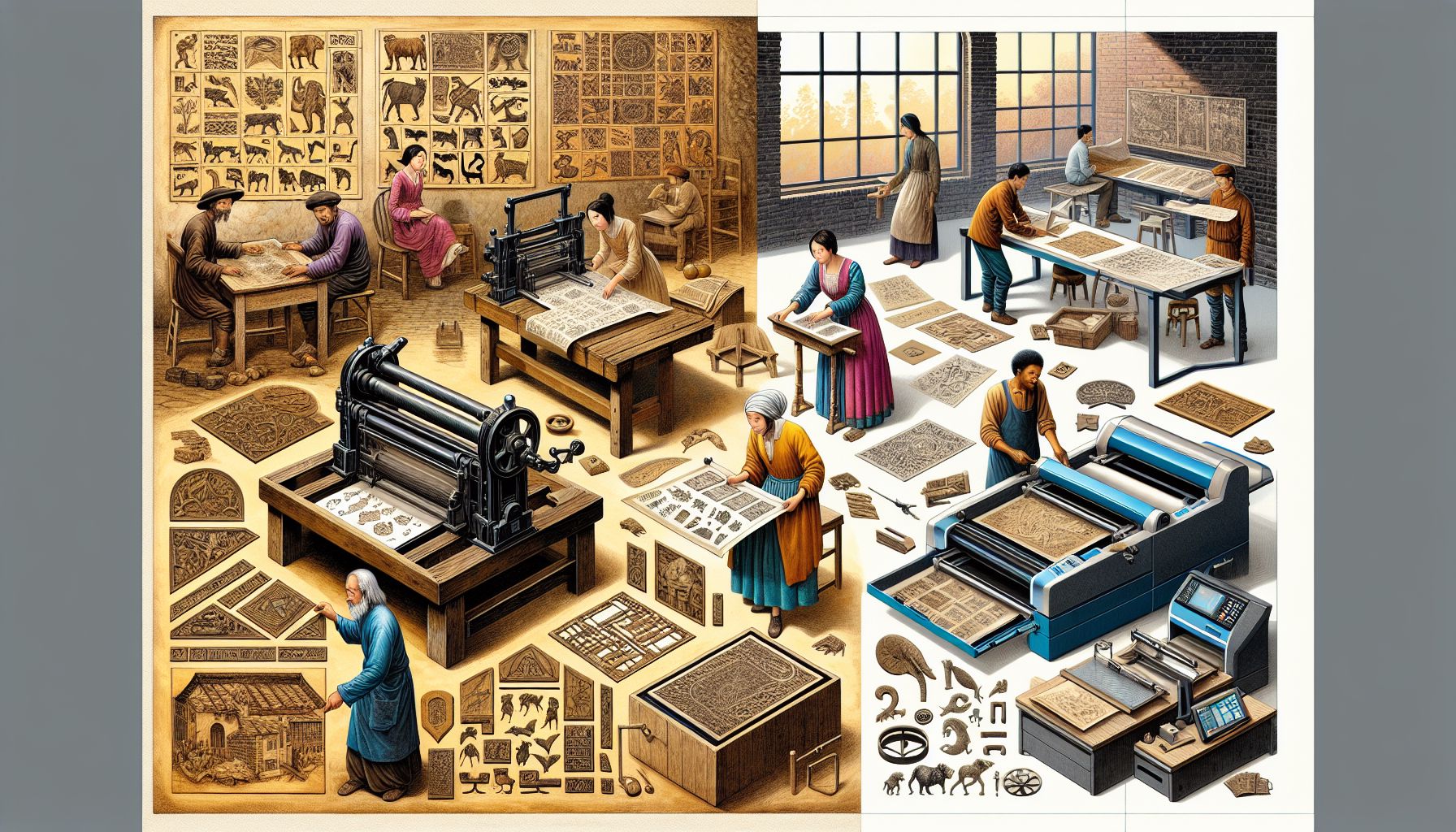
Exploring Various Printing Techniques: From Traditional to Modern
Printing techniques have come a long way since the invention of the printing press by Johannes Gutenberg in the 15th century. Over the years, countless advancements and innovations have revolutionized the way we reproduce images and text on various surfaces. From traditional methods like letterpress to modern digital printing, each technique offers its unique benefits and applications. In this blog post, we will delve into some popular printing techniques, exploring their characteristics, processes, and potential uses.
I. Traditional Printing Techniques
1. Letterpress Printing
Letterpress printing is one of the oldest known printing techniques, dating back to the mid-15th century. It involves using raised metal or wooden type, where ink is applied to the typeface and then pressed onto paper or other materials. This method impresses ink into the surface, creating a relief effect.
Letterpress printing offers a distinctive tactile quality due to the impression it creates on the paper. It is often favored for its elegance and vintage look, making it popular for wedding invitations, business cards, and fine art prints.
2. Offset Lithography
Offset lithography, also known as offset printing, revolutionized the printing industry in the early 20th century. It involves transferring ink from a metal plate to a rubber blanket before it is applied to the printing surface. This indirect method allows for high-speed production and consistent quality.
Offset lithography is widely used for large-scale commercial printing, including newspapers, magazines, and brochures. Its flexibility, cost-effectiveness, and ability to reproduce vivid colors make it a popular choice for high-volume printing.
3. Gravure Printing
Gravure printing, also called rotogravure, is a technique that utilizes an engraved metal plate to transfer ink onto the printing surface. Unlike letterpress and offset lithography, gravure printing utilizes recessed areas on the plate to hold ink, resulting in a smooth and consistent finish.
This method is commonly used for printing high-quality images in magazines, catalogs, and packaging. It excels at reproducing fine details and continuous tones, making it a prime choice for artistic and photography-based prints.
II. Modern Printing Techniques
1. Digital Printing
Digital printing is a modern technique that involves transferring digital images directly onto a printing surface without the need for traditional printing plates. This process is usually carried out using high-quality inkjet or laser printers.
Digital printing offers several advantages, including quick turnaround times, cost-effectiveness for low-volume printing, and the ability to customize prints. It is widely used for personal printing projects, as well as on-demand printing for marketing materials and small-scale business requirements.
2. Screen Printing
Screen printing, also known as silk screening, is a versatile technique that uses a stencil to push ink through a fine mesh screen onto the printing surface. Each color requires a separate stencil and corresponding pass of the squeegee.
Screen printing is highly adaptable, allowing for printing on various materials such as textiles, glass, ceramics, and paper. It is commonly used for creating art prints, posters, t-shirts, and promotional products due to its vibrant colors and ability to print on curved or irregular surfaces.
3. Flexography
Flexography, often referred to as flexo printing, is a versatile and cost-effective technique primarily used for packaging materials. It utilizes flexible rubber plates with raised images, which are inked and then transferred onto the substrate.
This method is prevalent in the production of labels, cardboard boxes, and flexible packaging materials. Flexography offers excellent print quality, high-speed production capabilities, and the ability to print on a wide range of materials, including plastics and metallic foils.
III. The Future of Printing
As technology continues to advance rapidly, the printing industry is constantly evolving. With the rise of additive manufacturing or 3D printing, we can now create three-dimensional objects layer by layer, expanding the possibilities beyond traditional flat surface prints.
Furthermore, advancements in nanotechnology and conductive inks have paved the way for printing electronic components such as flexible displays and sensors. These emerging technologies hold the promise of transforming industries like healthcare, automotive, and electronics.
IV. Conclusion
From the traditional craftsmanship of letterpress to the precision of digital printing, and the versatility of screen printing to the high-volume capabilities of offset lithography, each printing technique brings its unique characteristics and applications. As the printing industry continues to innovate, combining traditional methods with modern technology opens up new possibilities and creative avenues. Exploring these techniques and embracing the future of printing will undoubtedly drive design, communication, and manufacturing forward in exciting and unexpected ways.