
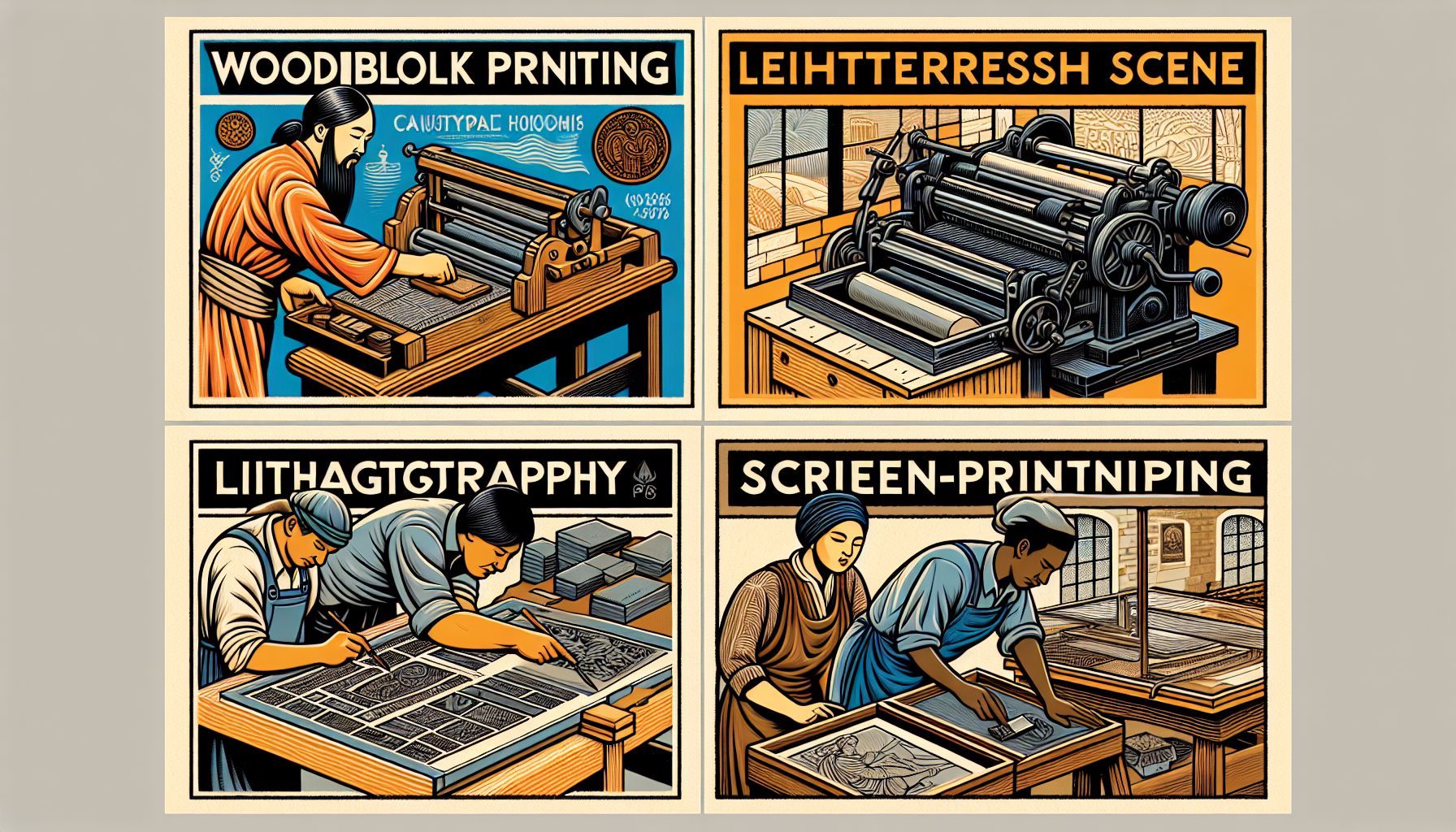
An In-depth Look at Diverse Printing Techniques
From books and magazines to t-shirts and artwork, printing techniques have been at the heart of communication and expression for centuries. As technology has advanced, we have seen a remarkable evolution of printing methods, allowing us to print in a wide variety of formats and on an equally diverse range of materials. This blog post will delve into the world of printing, exploring various techniques, their applications, and how they’ve shaped the industry.
What is Printing Technique?
Printing technique refers to the method used to apply ink onto a surface to deliver an image, letter or pattern. The technique used can vary based upon a number of factors including but not limited to; the material of the surface, the design’s complexity, and the desired final look of the print.
A Brief History of Printing
The history of printing dates back to ancient times when the first recognizable printing was found in the form of block printing used by ancient civilizations such as the Sumerians and Egyptians. The Chinese are credited with inventing the wooden block printing method around 600 AD. This method involved carving a mirror image of a document or design into a wooden block. The block was then inked and pressed onto fabric or paper.
Fast forward a few centuries, Johannes Gutenberg revolutionized the printing world in the 15th century with the invention of printing press using movable type. This significant development paved the way for mass production of printed materials, making information more available to the general public.
Now, let’s delve into the various printing methods that have evolved over time.
Offset Lithography
Offset lithography is one of the most common printing techniques, capable of printing on flat surfaces such as paper, cardboard, and plastic. It works on a simple principle: water and printing ink do not mix. The image to be printed is placed on a plate, which is then dampened; ink is applied but adheres only to the image area. The image is then transferred (or offset) onto a rubber blanket and finally applied to the printing surface.
This printing method is perfect for high volume commercial needs like books, newspaper, stationaries and is appreciated for its cost-effectiveness and high-quality outputs.
Flexography
Flexography, frequently referred to as flexo, is a direct descendant of the basic techniques used in letterpress. It uses a flexible relief plate made usually of rubber or plastic. This technique is most commonly used for packaging, labels, and any type of substrate that requires printing.
Flexography has high press speeds, can print on a wide variety of substrate materials and has low equipment and maintenance costs making it a popular choice for packaging designs.
Digital Printing
Digital printing came about with the advent and progress of technology. It involves the process of printing directly from a digital-based image onto a variety of media. It usually refers to professional printing methods where small-run jobs are processed using large format and/or high volume print/copy machines.
Digital printing provides flexibility as you can easily modify images before printing and its high resolution provides clear, high-quality prints. This method is perfect for individuals with small business needs or a need for variable data printing like personalized mail pieces.
Screen Printing
Screen printing, also known as silk screening, is a technique where a mesh is used to transfer ink onto a substrate, except in areas made impermeable to the ink by a blocking stencil. Originally, this process was done using silk screens hence the name “silk screening”.
This technique is often employed in fabric and clothing printing but can be utilized on other surfaces too. The benefit of screen printing is that it produces vibrant colors even on dark backgrounds.
Gravure Printing
Gravure printing or rotogravure is an intaglio printing process, where the image to be printed is engraved into a cylinder. This process is highly efficient for high volume work such as newspapers, magazines, and packaging.
Conclusion
The world of printing is as diverse as it is intriguing, with each technique suited to different tasks, resulting in a finished product that often reveals the method in its look, feel, and quality. Whether you’re an artist trying to best showcase your work, a small business owner seeking to establish their brand, or an industry mogul aiming to mass produce, understanding these methods can steer you towards the best technique for your needs.