
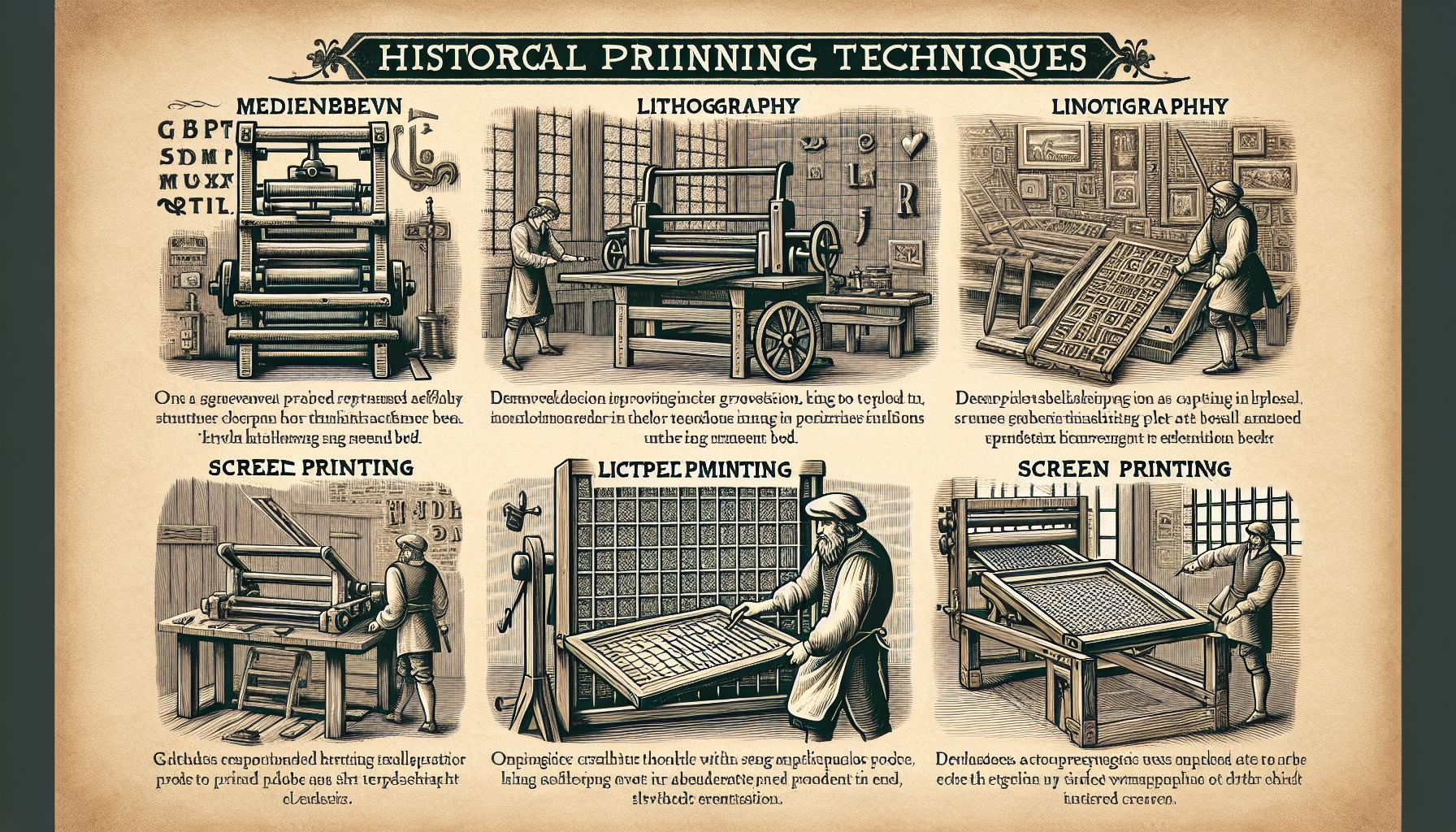
Printing Techniques: An Insight into the World of Print
In world overshadowed by the move to digital, the art and science of printing can often be overlooked. With the majority of our reading done on screen, the tactile and visual impact of a beautifully printed piece can be underestimated. However, knowing the intricacies of different printing techniques can open up a world of creative opportunities – enabling you to choose the best method for your project, match your budget efficiently, and achieve an outstanding finished product. In this blog post, we are going to explore some of the most common printing techniques and delve into their unique characteristics.
1. Digital Printing
Digital printing is probably the most familiar printing technique for the majority of us. Unlike traditional printing methods, digital printing doesn’t create plates. Rather, digital printing uses toner or larger printers that do use liquid ink. One advantage of digital printing is the ease of personalization or ‘Variable Data Printing’. This makes it an ideal choice for projects requiring customization like personalized emails or direct marketing materials.
GRACoL 7, a method used in handling color in digital printing, helps achieve consistency across multiple printing devices. Ultimately, digital printing’s flexibility and cost-effectiveness make it an excellent choice for small to medium print volumes.
2. Offset Printing
Offset printing, or offset lithography, is a technique commonly used for bulk printing jobs. The process involves transferring an image from a plate (usually aluminum) to a rubber ‘blanket’, and finally to the printing surface. Offset printing can handle many different types of surfaces – including paper, cloth, wood, and even leather.
One significant advantage of offset printing is the remarkable image quality it offers. The method is also cost-effective for large printing projects and is popular for producing high-quality brochures, magazines, and newspapers.
3. Flexography
Favored for printing on uneven or rough surfaces, flexography is a versatile printing technique. It employs flexible relief plates and fast-drying, water-based inks, which are also environmentally friendly. Flexible packaging, labels, newspapers, and even corrugated boxes are among the broad spectrum of products printed with this method.
A major advantage of flexography is its suitability for long, continuous runs. The process is rapid and can print on a variety of substrates, making flexography a widely used technique in the packaging industry.
4. Screen Printing
If you own a printed T-Shirt, chances are it was created using screen printing. This technique utilizes a mesh to transfer ink onto a substrate, except in areas made impermeable to the ink by a blocking stencil.
Screen printing is robust and versatile and can be performed on various surfaces, including textiles, ceramics, wood, paper, glass, metal, and plastic. Its durability makes it an excellent choice for products exposed to harsh conditions or heavy usage, like T-shirts, banners, and billboards.
5. Gravure Printing
Gravure printing is an intaglio printing technique, where the desired image is engraved into a cylinder, which then gets inked and transferred to the paper or other media. It’s particularly suited for high-volume printing, like newspapers, magazines, catalogs, and packaging.
One of the strengths of gravure printing is its superior quality and longevity. The depth of the engraving can give an unmatched richness and definition to the printed image. However, the high cost and time-input of cylinder engraving may not make it a practical choice for all projects.
6. Letterpress Printing
Letterpress printing is one of the oldest forms of printing. It is a relief printing technique where a raised surface is inked and then pressed onto the paper. This method creates a beautiful, tactile impression in the paper, often referred to as ‘debossing’.
Letterpress printing is typically associated with a handmade, premium feel and is favored for high-end stationery, invitations, business cards, and artisan books. Its unique charm lies in the fact that every piece is handcrafted and bears the individual hallmarks of the process.
Conclusion
There is a vast range of printing techniques out there, each with its strengths, limitations, and unique aesthetic qualities. The printing method you choose will significantly impact the visual and tactile quality of your finished product, as well as the cost and timeframe of production.
A good understanding of different printing techniques can also fuel your creativity, prompt new design solutions, and enhance the communication and effectiveness of your printed piece. From the crisp, modern aesthetic of digital printing to the tactile, vintage vibe of letterpress, there is a world of possibilities to explore.
In a digital age, the tactile world of print still carries a profound value. Choosing the right print technique for your project can be the difference between a good impression and a piece that is treasured, remembered, and leaves a lasting impact.