
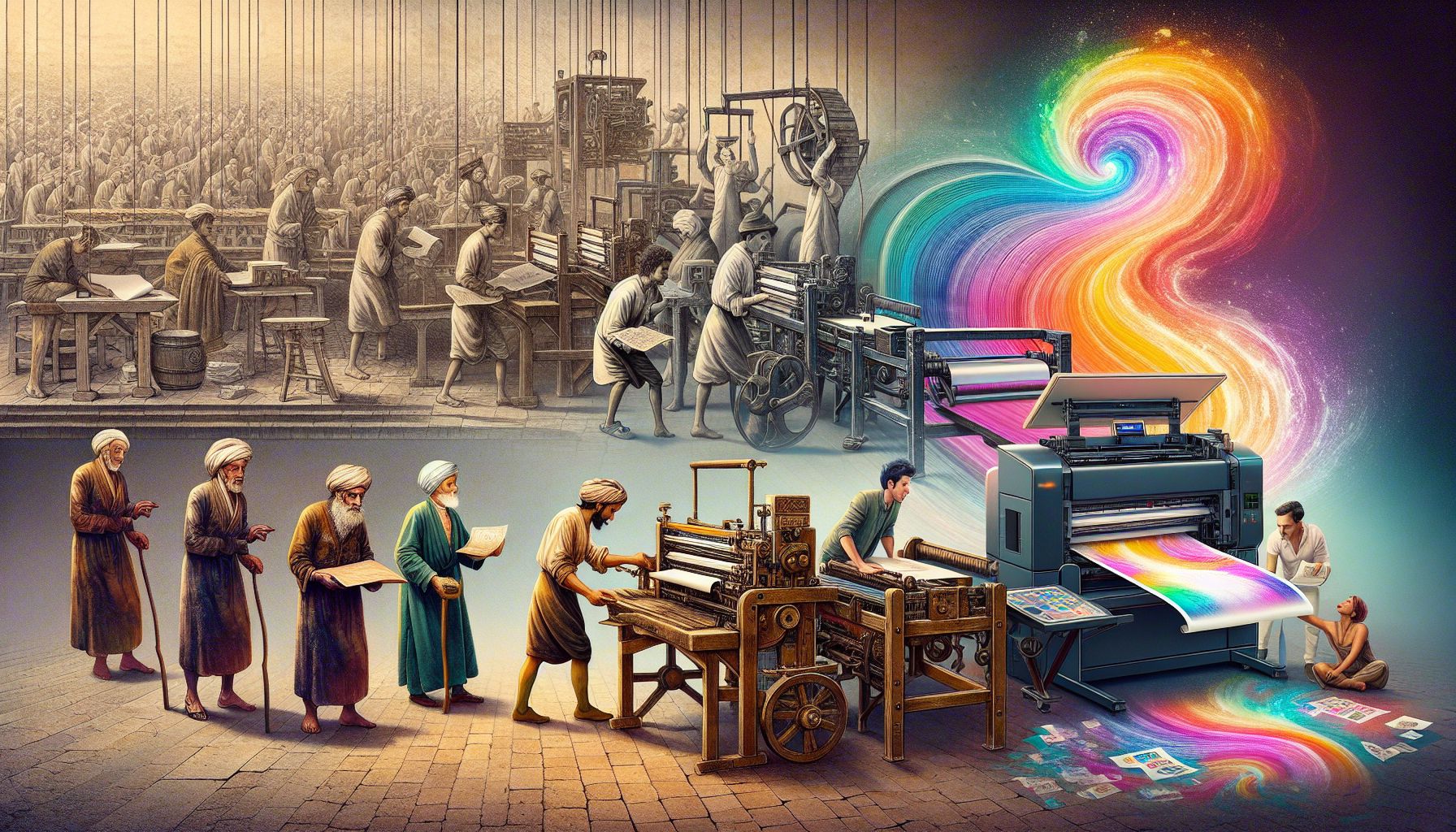
The Magic Behind Printing Techniques: From Analog to Digital
Printing has come a long way since its inception, evolving from manual hand presses to advanced digital printing techniques. Today, these techniques play a crucial role in various industries, providing us with vivid imagery, informative literature, and stunning artworks. In this article, we will explore the fascinating world of printing techniques, from the traditional to the cutting-edge, and understand how they have revolutionized the way we communicate visually.
Introduction: The Evolution of Printing
Printing as a practice dates back to ancient times when woodblock printing was used in Asia to reproduce texts and images. Over time, printing methods evolved, and technology progressed, leading to the development of more sophisticated techniques. From letterpress and offset printing to digital printing and beyond, each step in this historical timeline has contributed to the art of printing as we know it today.
The Traditional Printing Techniques
1. Letterpress Printing
Letterpress printing is one of the oldest and most widely recognized printing techniques. It involves creating a raised surface with inked letters or images and pressing them onto paper. Originally, metal or wooden type was used, making it a time-consuming process. Letterpress printing is renowned for providing a tactile feel and a classic, vintage aesthetic. Though less commonly used now, it has seen a revival in recent years, appreciated by designers and artists for its unique qualities.
2. Offset Printing
Offset printing, also known as lithography, has been the dominant printing technique for several decades. It involves transferring ink from a metal plate to a rubber blanket, which then applies the image or text onto the paper. This indirect method allows for high-quality and consistent prints. Offset printing is widely used for various applications, such as newspapers, magazines, packaging, and marketing materials. It offers a cost-effective solution for medium to high-volume print runs.
3. Gravure Printing
Gravure printing, often used for high-volume production, involves engraving the image onto a cylinder. The cylinder is then submerged in ink, and the excess is wiped off, leaving ink only in the recessed areas. A paper or plastic sheet is pressed against the cylinder, transferring the image onto the surface. Gravure printing is ideal for large-scale projects, including magazines, catalogs, and packaging. It produces remarkable detail and vibrant colors, making it popular for reproducing photographs.
4. Flexography
Flexography, or flexo printing, is a technique similar to letterpress printing. However, instead of using rigid plates, flexible rubber or polymer plates are utilized. These flexible plates can easily conform to various surfaces, making flexography suitable for printing on irregularly shaped objects, such as labels, packaging materials, and even newspapers. Flexo printing enables fast printing speeds and is well-suited for large, continuous print runs.
The Rise of Digital Printing Techniques
The advent of digital technology revolutionized the printing industry. Digital printing techniques have not only simplified the process but also expanded the possibilities in terms of customization and speed.
1. Inkjet Printing
Inkjet printing is a popular digital printing technique that recreates digital images by propelling droplets of ink onto the paper. With precise control over the droplets, inkjet printers can produce high-resolution prints with exceptional color accuracy. The ability to print on a wide range of materials, including paper, canvas, and fabrics, makes inkjet printing versatile for various applications. Additionally, it allows for on-demand printing, making it cost-effective for small print quantities.
2. Laser Printing
Laser printing involves using a laser beam to create an electrostatic image on a drum or photoreceptor. The image is then transferred onto the paper using toner, which is fused onto the surface by heat. Laser printers are known for their fast printing speeds and sharp output quality, making them popular in offices and schools. While laser printing is primarily used for text-heavy documents, advancements have allowed for improved color printing capabilities on certain laser printers.
3. Dye-Sublimation Printing
Dye-sublimation printing is a technique commonly used to print onto fabrics and textiles. By using heat to transfer dye onto a synthetic material like polyester, the dye sublimates and permanently bonds with the fibers. Dye-sublimation printing produces vibrant, long-lasting images with excellent color reproduction. This technique is often employed in textile printing, producing personalized clothing, banners, and soft signage.
4. 3D Printing
While not traditionally considered within the realm of “printing,” 3D printing has become an increasingly popular technique in recent years. 3D printers produce solid objects by adding layers upon layers of material, such as plastic or metal, based on a digital model. This incredible innovation has opened up new possibilities in various fields, including product prototyping, medical applications, architecture, and even culinary arts. 3D printing is transforming industries and challenging traditional manufacturing methods.
Conclusion: The Future of Printing Techniques
From letterpress and gravure to inkjet and 3D printing, the world of printing techniques has continually evolved, enabling communication through visual media. Each technique offers unique capabilities, catering to different needs and sectors. As technology progresses, we can expect further advancements in the field of printing, providing us with even more efficient, cost-effective, and sustainable solutions. Whether for personal or commercial purposes, printing techniques continue to shape our world, and it will be exciting to witness the innovations that lie ahead.