
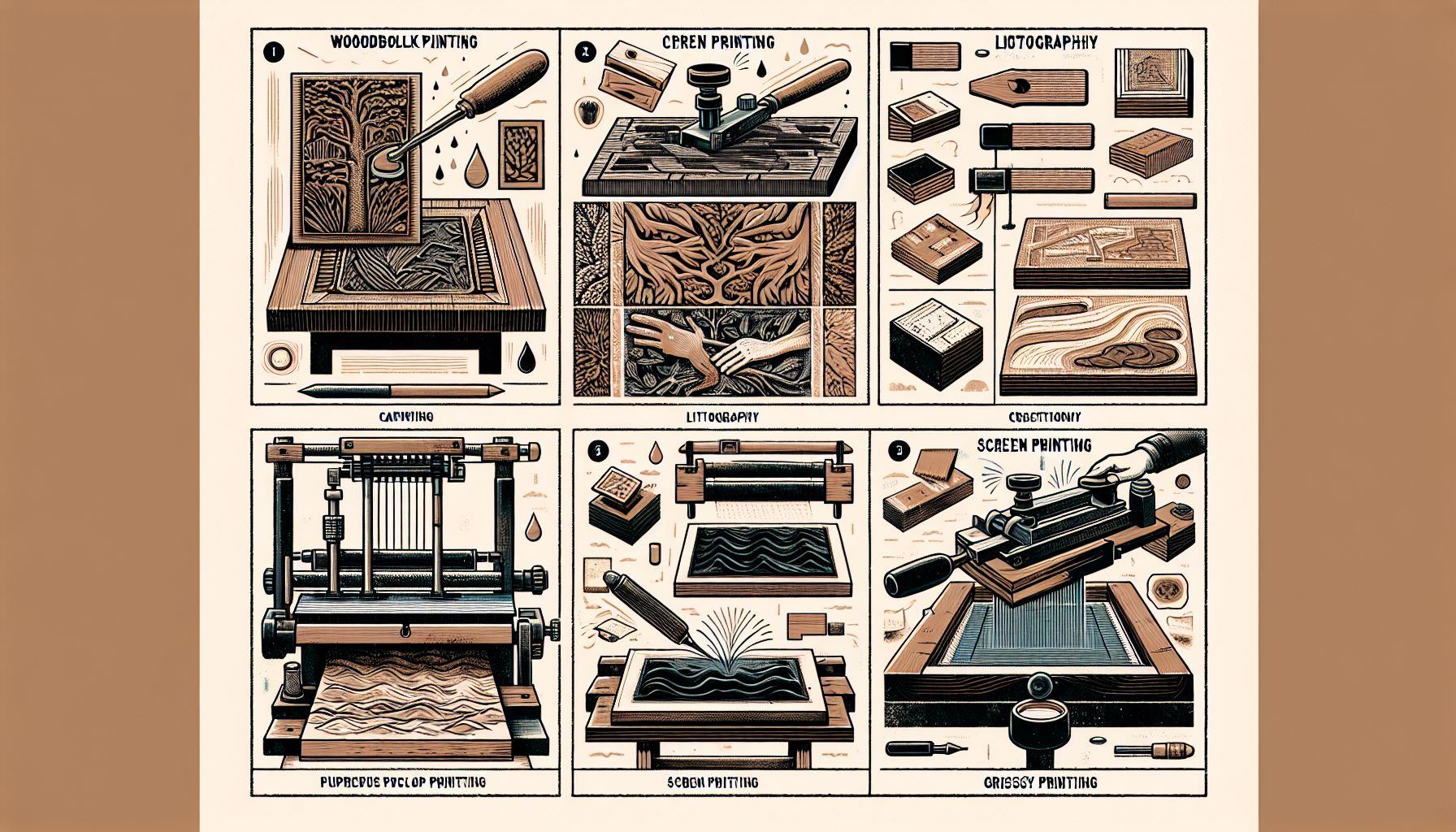
The Comprehensive Guide to Different Printing Techniques
Printing has been around for hundreds of years, revolutionizing communication and the way we disseminate information. Over time, numerous printing techniques have evolved to serve different needs, each bringing a unique mix of quality, speed, cost, and capabilities. This comprehensive guide explores diverse printing techniques to help you choose the ideal method for your next printing project.
The Evolution of Printing Techniques
Gutenberg’s invention of the moveable type in the 15th century laid the foundation for modern-day printing. The following centuries saw rapid growth and evolution in printing technologies, guided by the demands of industry trends and advancements in related areas such as digital technology and materials engineering.
Although originated centuries ago, traditional printing techniques like letterpress, engraving, and lithography are still in use today, prized for their unique aesthetic qualities. However, these techniques have been largely superseded by digital printing methods, which offer unprecedented speed, flexibility, and affordability.
Modern Printing Techniques
There are several modern printing techniques currently in use. Here’s a detailed look at some of the most popular ones.
Digital Printing
Digital printing is the most common type of printing technique used today, primarily due to its speed and versatility. Instead of using plates like traditional printing methods, digital printing employs toners (like in laser printers) or larger printers that use liquid ink. Digital printing makes it easy to customize individual prints and is also cost-effective for small quantities.
Advantages of Digital Printing
- Flexibility: Digital files can be updated and adjusted right up until the moment of print, making last-minute changes easy.
- Speed: The process can produce high-quality prints within minutes.
- Lower Costs: For small quantity printing, digital printing can be much cheaper than other printing methods.
Offset Lithography
Offset lithography is a common method for printing on flat surfaces, such as paper, cardboard, or plastic. It works on a simple principle: water and oil don’t mix. Images (or text) are applied to printing plates, which are dampened by water and ink. Since oil-based ink doesn’t mix with water, it sticks only to the desired design areas.
Advantages of Offset Lithography
- High-Quality Images: Offset Lithography can produce sharp, clean, high-quality images and typefaces.
- Efficiency: The more you print, the cheaper the price-per-piece becomes.
- Versatility: It can print on a wide variety of printing surfaces.
Screen Printing
Screen printing or silk-screening is a technique where a stencil (or a “screen”) is used to apply layers of ink on the printing surface. Each color uses a different stencil, applied one at a time, combined to achieve the final look.
Advantages of Screen Printing
- Long-Lasting: Due to the composition and thickness of inks used in screen printing, designs placed with this method can withstand a lot more stress than others without losing the quality of the print.
- Versatility: It can print on almost any material.
- Vibrant Colors: The ink in screen printing is applied thicker than digital printing, which results in brighter colors.
Specialty Techniques
In addition to these primary printing methods, a range of specialty techniques exist to meet specific needs or deliver aesthetic qualities.
Letterpress
Letterpress printing is a relief printing technique that involves ‘pressing’ an inked raised surface against sheets of paper. It’s one of the oldest forms of printing and is used nowadays for the unique and high-end look it provides.
Engraving
Another traditional technique, engraving, uses engraved plates to print a design onto paper. The method is generally used for high-end invitations, stationery, and business cards, as it gives an appealing tactile finish.
Thermography
Thermography produces raised prints, similar to engraving but without the same price tag. This technique involves applying a heat source to a design that has been dusted with a resinous powder, causing it to bubble and create a raised effect.
Conclusion
Each printing technique has its unique characteristics, strengths, and considerations. Your choice will indeed depend on the nature of your project and desired outcome. Our guide serves as a starting point, enabling you to understand and explore the wide world of printing techniques to achieve remarkable results for your print projects.