
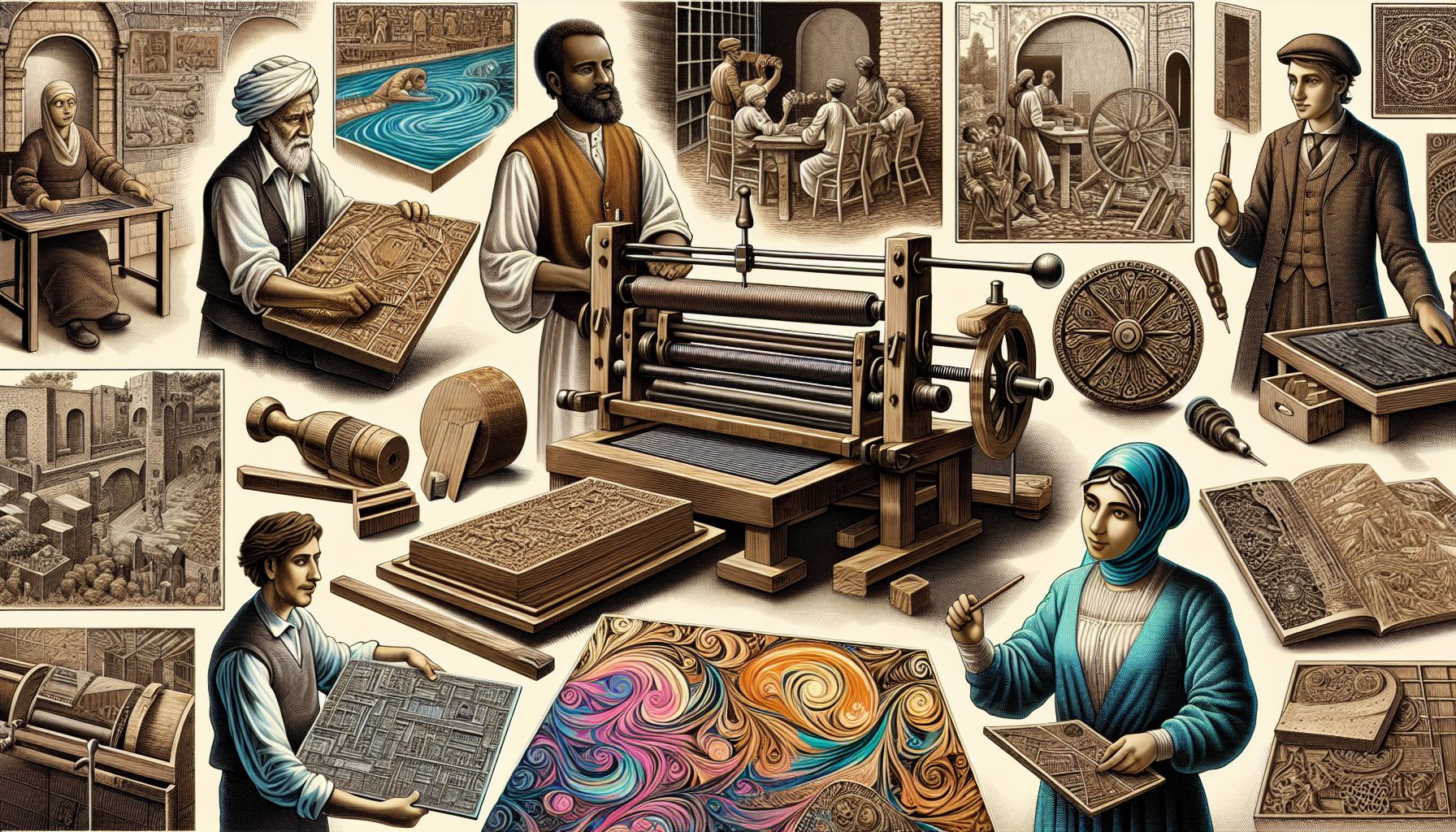
Unveiling the Panorama of Printing Techniques: An In-depth Exploration
Printing has long been a vital component of human civilization, fostering knowledge sharing, inspiring creativity and spreading information through generations. In today’s age of digital technology, it’s easy to overlook the intricate and diverse world of printing. However, understanding the various techniques involved in the print world can deepen our appreciation of the medium and enhance our skills when we need to use it. In this blog post, we’ll take a deep dive into several traditional and modern printing techniques.
Introduction: A Glimpse into the Print World
Since the invention of moveable type by Johannes Gutenberg in the mid-15th century, printing has undergone a series of innovations that have expanded its scope and capabilities. Today, printing encompasses several techniques that provide specific advantages based on the project requirements.
Part I: Traditional Printing Techniques
There are several traditional printing methodologies that have stood the test of time. Although they might not be as popular in the mass production industry due to the advent of digital methods, these traditional techniques are still prevalent in specialized areas like fine art, handmade crafts, and small-scale productions.
Letterpress Printing
Letterpress printing is one of the oldest forms of printing, which uses a press and moveable type. The letters required for the work are arranged, inked, and then pressed onto the paper. The result is crisp, beautiful text with a distinct feel.
Engraving
Engraving is a technique where an image or text is cut into a metal plate, filled with ink, and then pressed onto paper. This method is typically used when a high level of detail is desired, such as in invitations or certificates.
Lithography
Lithography employs a stone or metal plate with a smooth surface, which is treated to retain ink only in areas intended for printing. The process was once widely used for book illustrations, posters, and fine art reproductions.
Screen Printing
Screen printing, or serigraphy, is a technique where a mesh is used to transfer ink onto a substrate, except in areas made impermeable to the ink by a blocking stencil. This method is popular for reproducing images on fabrics and ceramic products.
Part II: Modern Printing Techniques
In recent times, digital technology has profoundly transformed the printing landscape, primarily due to its versatility, speed, and cost-effectiveness.
Offset Printing
Offset printing, despite being a century-old technology, is widely used today for mass production as it provides high-quality prints and cost-effectiveness for large volumes. The process uses etched metal plates that apply ink onto a sheet of paper.
Digital Printing
Digital printing technique involves printing from a digital-based image directly to a variety of media. Simplifying the process compared to traditional methods, digital printing allows for greater flexibility, quicker turnaround times, and customization.
3D Printing
One of the most revolutionary advancements in the field, 3D printing translates digital 3D models into physical objects. This method has seen extensive applications across industries, from prototyping industrial parts to creating personalized merchandise.
Flexography
Flexographic printing is largely used for packaging and labels. It uses flexible rubber or plastic plates and solvent-based inks, and can be applied on a variety of substrates, including plastic, metallic films, and paper.
Conclusion: Print Techniques in the Spotlight
The world of printing is a landscape of versatility and possibility. Every technique, whether traditional or modern, offers unique benefits and characteristics. Familiarity with these methods enables us to make better decisions about which technique will be most effective for any given project.
The art of print lives on! As we come full circle in understanding this journey, we realize that the story is continually evolving with the advent of new technology, offering fresh perspectives and opening up new frontiers for exploration. So next time when you hold a printed book, examine a label, see a poster or scan a billboard, take a moment to appreciate the science and art behind printing.
In a digital-dominated world, the significance of tangible, physical media crafted by skilled hands using ingenious techniques remains unparalleled. It is these myriad printing techniques that give our world of color and creativity a physical and more personal touch.