
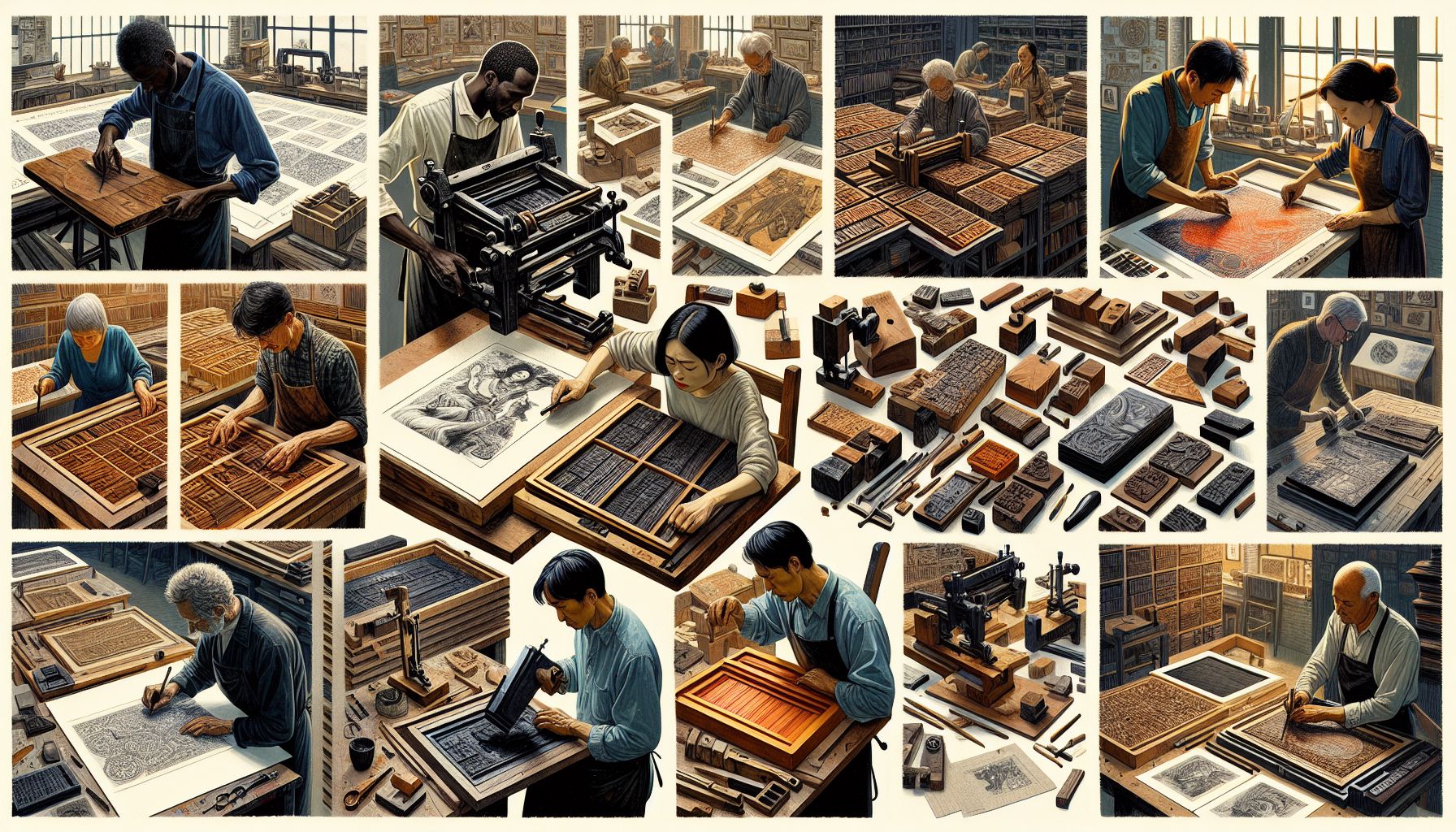
Mastering the Art of Printing: An Exploration of the Different Printing Techniques
Printing is a pivotal process that brought about an astonishing revolution in human communication. This inventive feat, dating back to several centuries ago, has kept pace with the ceaseless wave of technological innovations. As might be expected, the current range of printing techniques is impressively diverse, with each method offering distinctive attributes.
An Introduction to the Fascinating World of Printing
For most individuals, printing is often associated with an uncomplicated press of a button, resulting in the conversion of a digital document into a tangible form. Such a simplified perception, however, barely scratches the surface of what printing truly entails.
Predating digital printers by several centuries, the history of printing dates back to China’s Tang Dynasty, when the first-ever recorded print, the Buddhist Diamond Sutra, was developed. This revolutionary process has since grown in leaps and bounds. Today, various types of printing techniques are available, each with its peculiarities and benefits, based on the needs of the user.
Key Printing Techniques
Delving into the detail, let’s explore some of the leading printing techniques that have revolutionized the industry over time.
Offset Lithography
Offset lithography is predominantly adopted for bulk printing, particularly when high-quality prints are required. This technique functions by transferring an inked image from a printing plate to a rubber blanket and, subsequently, onto the printing surface. The method is named “offset” due to the ink not being transferred directly onto the paper. Offset lithography is favored due to its efficiency in creating sharp, clean, and high-resolution images.
Flexography
Flexography, or “flexo,” is a technique typically employed for printing on varying types of surfaces, including cloth, cellophane, plastic, metallic films, and paper. This highly versatile technique is commonly used for printing large areas of solid color and for products like food packaging, labels, and newspapers.
Digital Printing
Unveiling the epitome of modernity, digital printing is an incredibly versatile and prompt process. Instead of utilizing plates, this technique processes the artwork digitally and directly translates it onto the paper. This allows for swift turn-around times and cost-effective short-run prints. Plus, the method delivers high-quality, customized prints swiftly and efficiently.
Screen Printing
Screen printing, or silkscreen printing, is a popular method for surfaces that are difficult to print with other techniques. In this method, a mesh is used to transfer ink onto a substrate, except in areas made impermeable to the ink by a blocking stencil. Screen printing is widely utilized for printing on clothing, ceramic, and signs.
Engraving
Engraving is a technique that is slightly less conventional but highly esteemed due to the distinctive quality it provides. An image is carved onto a metal plate, which is then filled with ink and wiped clean. The ink residing in the engraving is used to create an imprint on the paper. This method is typically adopted for specialized prints, such as wedding invitations or business cards.
Gravure Printing
Also referred to as rotogravure, this technique involves the engraving of an image onto a copper plate, which is then fitted onto a cylinder. The cylinder is then rotated on the paper, transferring the ink from the engraved spots onto the paper. It’s predominantly used for high-speed, high-quality color printing, specifically for magazines and catalogs.
The Influence of Printing Techniques on Industries
By and large, these printing techniques effectually influence various sectors, from publishing and packaging to advertising and textile. Each domain prefers a specific technique based on its unique requirements. For instance, while offset lithography and gravure printing dominate the magazine and newspaper production industry, flexography is the chosen technique for most product packaging.
Decisively, the advent of digital printing has reformed the traditional printing landscape, enabling various sectors to leverage technologically advanced, speedier, customizable, and cost-effective techniques in line with their evolving needs.
Conclusion: The Future of Printing Techniques
Pondering the future of these techniques, one can expect various advances to mold the trajectory of the sector. While the use of sustainable materials for printing is set to become a standard in the industry, ground-breaking techniques like 3D printing are all set to redefine the boundaries of innovation.
In this rapidly evolving world, the adage ‘Content is King’ remains an established truth; however, it is also undeniable that ‘Print is Queen.’ With each technique fostering unique benefits, the choice ultimately depends upon the needs and preferences of the user. As technology continues to transform our world, there’s little doubt that the art and process of printing will follow suit, shaping and manipulating our means of communication and self-expression in ways we never thought imaginable.