
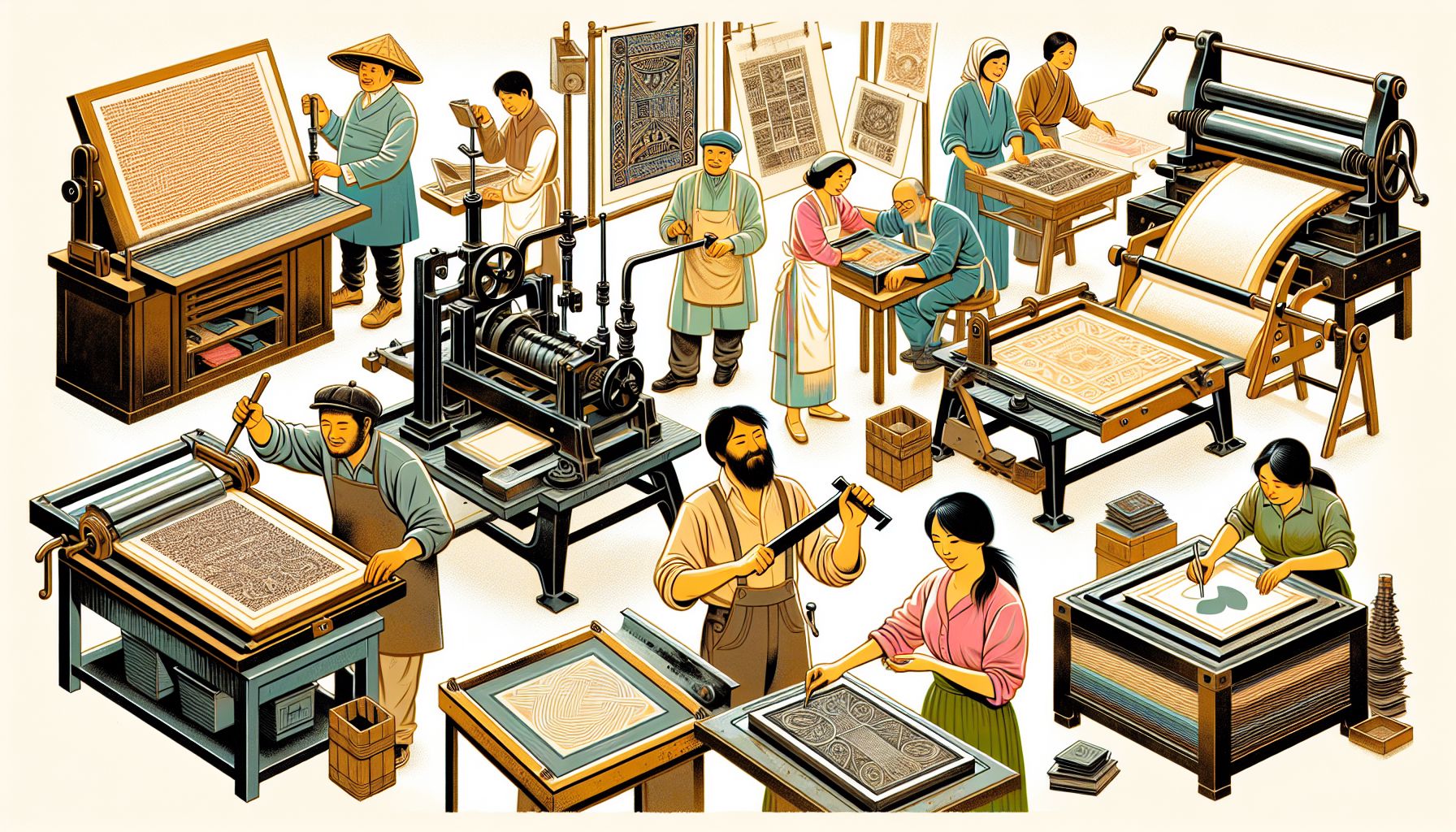
Exploring the World of Printing Techniques
Printing techniques have been around for centuries, helping us share information and create beautiful works of art. From the early days of woodblock printing to the sophisticated digital printing methods of today, the world of printing is vast and diverse. In this article, we will explore some of the most popular printing techniques, their history, and how they are used today.
Introduction to Printing Techniques
Printing techniques can be broadly categorized into four main types: relief printing, intaglio printing, planographic printing, and stencil printing. Each type has its own unique characteristics and uses, making them suitable for different applications.
Relief Printing
Relief printing is one of the oldest printing techniques, dating back to ancient times. In relief printing, the image to be printed is raised on a block or plate, typically made of wood or linoleum. The ink is applied to the raised surface, and a piece of paper is pressed onto it to transfer the image.
Woodblock printing is a popular form of relief printing that originated in China around 200 CE. This technique involves carving an image into a wooden block, inking it, and pressing it onto a piece of paper. Woodblock printing was widely used in East Asia for printing books and images.
Intaglio Printing
Intaglio printing is a more intricate printing technique that involves engraving or etching an image into a metal plate. The plate is then inked, and the ink is forced into the grooves of the image. The excess ink is wiped off, leaving only the ink in the grooves. A damp piece of paper is then pressed onto the plate, transferring the ink onto the paper.
Etching and engraving are two of the most common intaglio printing methods. Etching involves using acid to create grooves in the plate, while engraving involves physically carving the image into the plate. Intaglio printing is known for its fine detail and sharp lines, making it popular for printing currency, stamps, and fine art prints.
Planographic Printing
Planographic printing, also known as lithography, is a printing technique that relies on the principle that oil and water do not mix. In lithography, an image is drawn or transferred onto a smooth surface, typically a metal plate or stone, using a greasy medium. The plate is then dampened with water, which adheres to the non-greasy areas of the image.
When ink is applied to the plate, it adheres only to the greasy areas of the image. A piece of paper is then pressed onto the plate, transferring the ink onto the paper. Lithography is a versatile printing technique that can produce detailed images and vibrant colors, making it popular for printing posters, books, and packaging.
Stencil Printing
Stencil printing is a simple printing technique that involves creating a stencil, or template, of the image to be printed. The stencil is placed over a surface, and ink or paint is applied through the openings in the stencil. When the stencil is removed, the image is revealed on the surface below.
Stencil printing has been used for centuries for printing textiles, signage, and artwork. Screen printing is a popular form of stencil printing that uses a mesh screen to transfer ink onto a surface. Screen printing is widely used for printing t-shirts, posters, and other materials.
Modern Printing Techniques
While traditional printing techniques have their charm and historical significance, modern printing methods have revolutionized the way we produce printed materials. Digital printing, offset printing, and flexography are just a few of the advanced printing techniques that are used today.
Digital Printing
Digital printing is a modern printing technique that involves printing digital files directly onto a variety of surfaces. Unlike traditional printing methods, digital printing does not require printing plates or setup time, making it fast and cost-effective for small print runs.
Digital printing is commonly used for printing business cards, brochures, and signage. With digital printing, it is easy to customize each printed piece with variable data, such as names and addresses. This makes digital printing ideal for personalized marketing materials and direct mail campaigns.
Offset Printing
Offset printing is a popular commercial printing technique that involves transferring ink from a printing plate to a rubber blanket, which then transfers the ink onto the paper. Offset printing produces high-quality prints with crisp images and vibrant colors, making it ideal for printing books, magazines, and catalogs.
Offset printing is known for its consistent quality and speed, making it a preferred choice for large print runs. The setup costs for offset printing can be higher than digital printing, but the per-unit cost decreases with higher quantities, making it cost-effective for bulk printing.
Flexography
Flexography, also known as flexo printing, is a versatile printing technique that uses flexible rubber or polymer plates to transfer ink onto a variety of substrates. Flexography is commonly used for printing packaging materials, such as labels, bags, and corrugated boxes.
Flexography is ideal for printing on non-flat surfaces and materials, such as plastic, metal, and food packaging. The quick-drying inks used in flexography allow for fast printing speeds, making it suitable for high-volume printing jobs. Flexography is also environmentally friendly, as it uses water-based inks and produces minimal waste.
Conclusion
Printing techniques have come a long way since the days of woodblock printing and metal engraving. From traditional methods like relief printing and intaglio printing to modern techniques like digital printing and flexography, the world of printing offers a diverse range of options for creating stunning printed materials.
Whether you are printing business cards, packaging materials, or fine art prints, there is a printing technique that is right for you. By understanding the characteristics and uses of different printing methods, you can choose the best technique for your printing needs and create professional-quality prints that will make a lasting impression.