
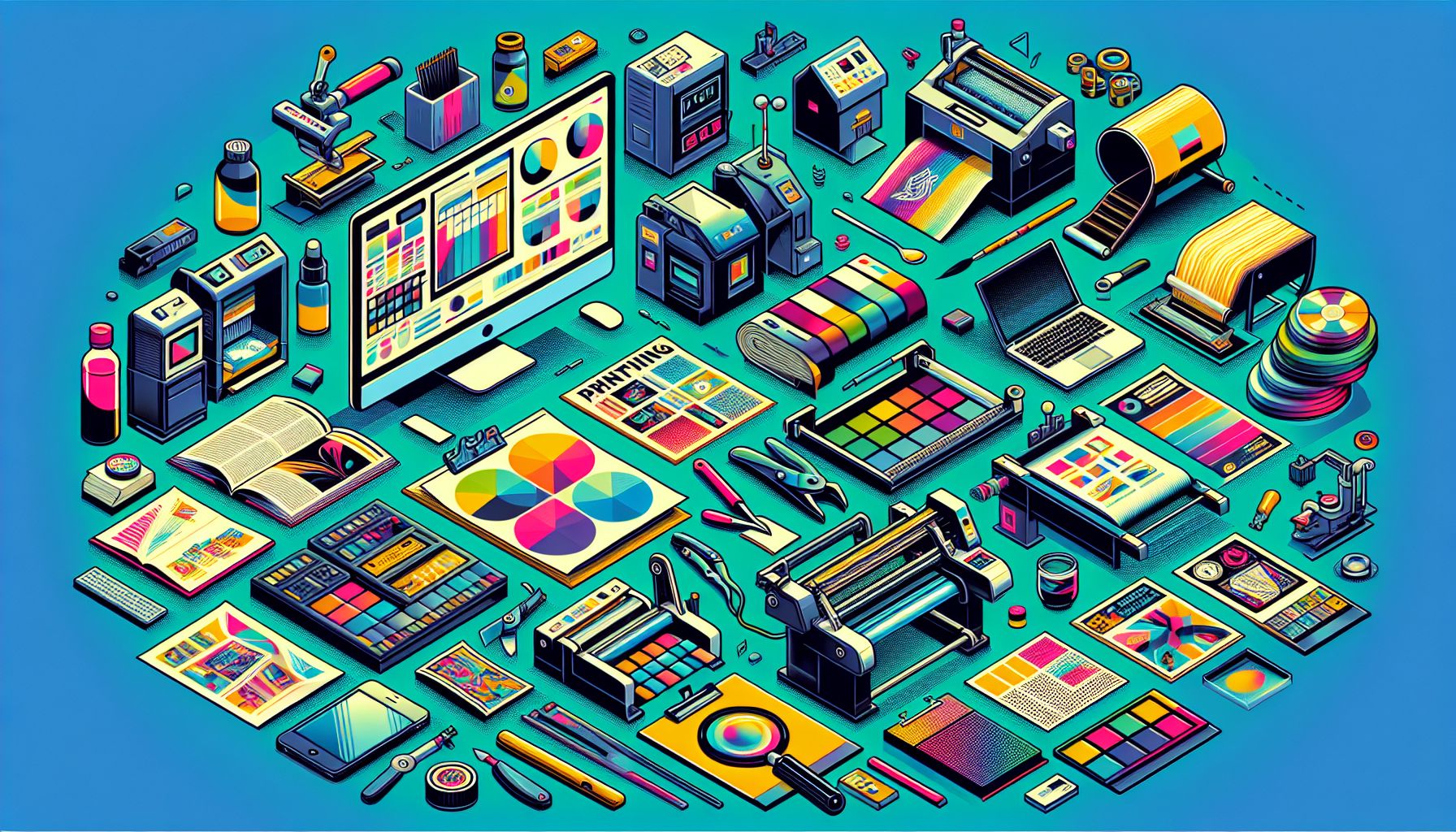
A Comprehensive Guide to Modern Printing Techniques
Printing technologies have evolved significantly over the last few centuries. From rudimentary woodblock carving to intricate 3D printing, the technological advancements in the printing industry have paved the way for designers, artists, and manufacturers to express their visions effectively and efficiently.
In this guide, we will explore the most common printing techniques, from traditional to cutting-edge. We will delve into how they work, their applications, and their advantages and disadvantages.
Traditional Printing Techniques
Let’s start by visiting some of the traditional printing techniques that have shaped the industry.
Offset Lithography
Offset lithography is one of the most conventional printing processes, predominantly used for mass-produced items such as newspapers, magazines, brochures, and stationery. It involves using plates, usually made of aluminum, onto which the design is imprinted. These plates are then inked and applied to rubber blankets, which transfer the design onto the paper.
The key advantage of offset lithography is its high image quality. Plus, the cost per piece is lower for large runs due to the lower price of materials. However, it may not be cost-effective for short-run printing due to the high setup time and cost.
Engraving
Engraving is one of the oldest forms of printing technology. Originally implemented on metal plates, the process involves etching a design into the plate, which is then filled with ink. A piece of paper is then pressed onto the plate, leaving a raised print on the paper.
Engraved printing is often used for high-end stationery, like business cards and invitations, as it provides a unique texture and a professional appearance. However, it can be time-consuming and expensive compared to other methods.
Letterpress
Letterpress printing, like engraving, is also a traditional method. This technique uses raised, inked, reversed images pressed against paper to create a correctly oriented picture or lettering. This printing method is often used for business cards, wedding invitations, and other stationery.
The attractiveness of letterpress lies in its beautiful, handcrafted aesthetic with its trademark impression in the paper. But it’s a labor-intensive process and not very suitable for large volume printing.
Modern Printing Techniques
Now, let’s delve into some of the more modern techniques that have revolutionized the printing industry.
Digital Printing
Digital printing refers to methods of printing from a digital-based image directly to various media. It typically uses toner or larger printers that use liquid ink. Digital printing is particularly expedient for short-run and personalized printing, covering a wide range of services, from photo books to corporate collaterals.
The main advantages of digital printing are speed and cost-effectiveness for lower volume jobs. However, the image quality may not be as fine as traditional printing methods.
Screen Printing
Also known as silk screening, this printing technique involves creating a stencil (printers call this a “screen”), and then using that stencil to apply layers of ink on the printing surface. It is a popular method for printing high-quality t-shirt designs, posters, and other textiles.
While this technique can produce brilliant, vibrant colors, it may not be as cost-effective or practical for small quantities or detailed, multi-color designs.
Flexography
Using flexible relief plates, flexography or flexo printing is essentially a more modern version of letterpress. It is used for high-volume runs, and is suited to printing on a variety of materials including plastic, foil, acetate film, and paper.
While flexography delivers a quick production speed and ability to print on a variety of surfaces, it can be expensive to set up and may not offer the best image quality.
Cutting-Edge 3D Printing
Touted as the future of printing, 3D printing or additive manufacturing builds 3D objects from a computer-aided design (CAD) model by successively adding material layer by layer.
The great advantage of 3D printing is its ability to produce complex shapes and designs that traditional manufacturing methods are unable to achieve. It’s a game-changer for many industries including healthcare, education, construction, and more. However, the cost and time associated with 3D printing may make it less viable for mass production.
Concluding Remarks
The world of printing is vast and expanding with constant innovations. Whether it’s the hands-on craftmanship of traditional methods or the precise and quick delivery of digital and 3D printing, there is a printing technique out there to suit varied needs and applications.
As we move forward, the line between traditional and modern techniques will likely continue to blur, combining the best of both worlds – the quality, feel, and aesthetic of traditional methods with the speed, versatility, and cost-effectiveness of modern techniques.
The one certain factor is that the printing industry will continue to grow, evolve, and influence many aspects of our lives, from the business cards we hand out, the magazines we read, to the clothes we wear. Knowing and understanding these printing techniques is key to making the right decision for your printing needs.