
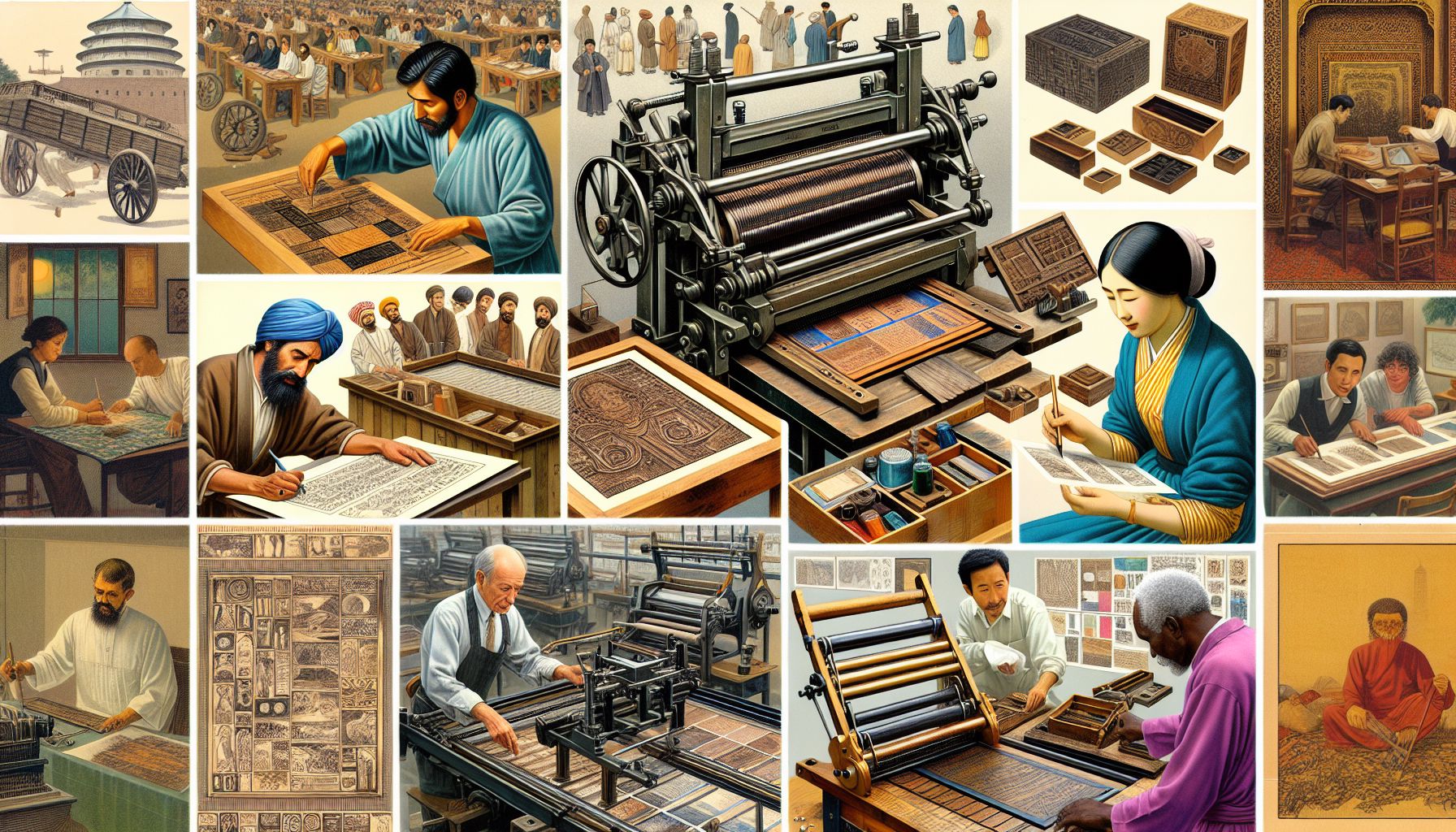
Exploring the World of Printing Techniques
From the traditional ink-on-paper methods to recent advancements in digital printing, the realm of printing techniques offers a plethora of options for businesses and individuals. These techniques are not only essential for reproducing documents and images accurately but also play a crucial role in creating visually striking and unique printed materials. In this blog post, we will unravel the diverse world of printing techniques, discussing their benefits, applications, and the technology behind them. So, let’s dive in and explore the fascinating world of printing!
Introduction to Printing Techniques
Printing techniques have evolved significantly since their inception thousands of years ago. Earlier, manual methods like woodblock printing and letterpress dominated the scene. Today, however, modern technologies have revolutionized the printing industry, providing a wide range of advanced printing techniques. Let’s take a closer look at some of the most popular ones:
1. Offset Lithography
Offset lithography, also known as offset printing, is one of the most widely used printing techniques today. It involves transferring ink from a plate to a rubber blanket and finally to the printing surface. The process takes advantage of the fact that water and oil repel each other, enabling the ink to adhere only to the desired areas. Offset lithography offers excellent color reproduction, making it ideal for various printing applications, such as magazines, brochures, and packaging materials.
2. Digital Printing
Digital printing has witnessed significant advancements in recent years, offering quick and cost-effective printing solutions. This process involves sending digital files directly to a printing device, eliminating the need for traditional printing plates. Digital printing offers exceptional flexibility, allowing for short print runs and personalization. Moreover, it provides quick turnaround times and the ability to make on-the-fly changes. With its wide range of applications, digital printing has brought printing capabilities directly into the hands of individuals and small businesses.
3. Flexography
Flexography, commonly referred to as flexo printing, is a versatile technique primarily used for packaging materials. It involves using a flexible relief plate and specialized inks to transfer images to various substrates, including plastic, metal, and paper. Flexography enables high-speed, high-volume printing with excellent color reproduction and image clarity. It finds extensive applications in industries such as food packaging, labels, and newspaper printing.
4. Gravure
Gravure printing is a technique that utilizes engraved cylinders or plates to transfer ink onto the printing surface. The recessed areas hold the ink, while the non-printing areas are smooth and free from ink. This process is popular for long print runs, especially for magazines, catalogs, and newspapers. Gravure printing offers exceptional image detail and consistency, making it a preferred choice for high-quality image reproduction.
Specialized Printing Techniques
Apart from the aforementioned techniques, there exist several specialized printing methods that cater to specific requirements. Let’s explore a few of these techniques:
1. Screen Printing
Screen printing, also known as silk-screening, is a versatile technique that involves spreading ink over a mesh screen using a squeegee. The areas not blocked by a stencil allow ink to pass through onto the substrate below, creating vibrant and durable prints. Screen printing offers versatility in terms of substrates used and is commonly employed for printing on fabrics, posters, signage, and promotional merchandise.
2. Letterpress
Although traditional letterpress printing has become less common, it has recently experienced a resurgence due to its unique aesthetic appeal. This technique involves pressing inked raised surfaces, typically metal type or plates, onto paper. Letterpress provides a timeless and tactile quality to printed materials, making it a popular choice for wedding invitations, business cards, and high-end stationery.
3. 3D Printing
One of the most revolutionary printing techniques, 3D printing, enables the creation of three-dimensional objects from digital models. Instead of using inks, 3D printers deposit layer upon layer of various materials, such as plastic or metal, to build intricate objects. This technique has found applications in fields like manufacturing, healthcare, architecture, and even culinary arts.
The Future of Printing Techniques
As technology continues to advance at a rapid pace, the world of printing techniques is not left untouched. Here are a few trends that could shape the future of printing:
1. Environmentally Friendly Printing
Sustainability has become a key concern in every industry, including printing. With this in mind, the development of eco-friendly printing techniques has gained traction. Printers are now opting for soy or vegetable-based inks, recyclable materials, and energy-efficient equipment to reduce their carbon footprint. As environmental awareness continues to grow, we can expect to witness further innovations in this direction.
2. Nanographic Printing
Nanographic printing combines the benefits of offset and digital printing, offering high-quality, cost-effective, and versatile printing solutions. It utilizes tiny pigment particles, in the range of tens of nanometers, which are deposited onto the printing surface to create images. This innovative technique boasts the ability to print on a wide range of substrates while maintaining the quality and resolution seen in traditional offset printing.
3. 4D Printing
Building on the concept of 3D printing, researchers are making strides in the field of 4D printing. This emerging technology involves printing objects that can change shape, self-assemble, or morph over time due to external stimuli, such as heat or water. 4D printing holds immense potential in sectors like robotics, biomedicine, and architecture, where adaptive and self-transforming structures are desired.
Conclusion
From traditional techniques that have withstood the test of time to cutting-edge digital printing methods, the world of printing offers endless possibilities for creative expression and functionality. Each technique brings its unique benefits and applications, catering to diverse printing needs. Whether you seek vibrant and customizable prints for your marketing materials or extraordinary three-dimensional objects, there is a printing technique perfectly suited to fulfill your requirements. As technology advances, we are bound to witness exciting innovations that will further expand the boundaries of what can be accomplished through printing. So, embrace the world of printing techniques and unlock the power of your imagination!