
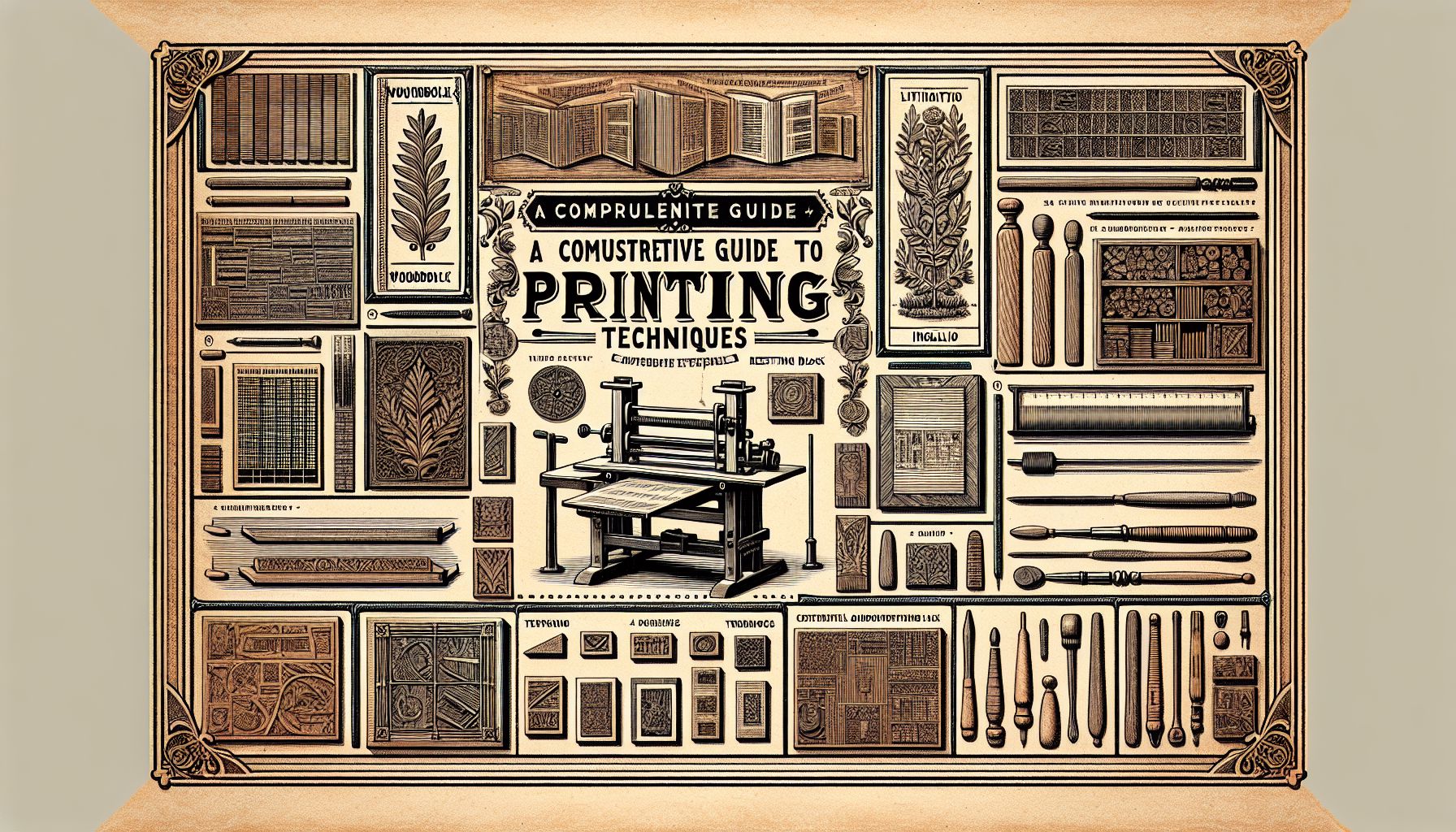
A Comprehensive Guide to Printing Techniques
Printing techniques have come a long way since the invention of the printing press in the 15th century. From simple ink on paper to advanced technologies capable of creating intricate designs, the world of printing has witnessed an evolution that has made it an essential tool in various industries. In this comprehensive guide, we will explore different printing techniques, their applications, and the unique advantages they offer.
Introduction to Printing Techniques
Printing techniques can be broadly categorized into four types: relief printing, intaglio printing, planographic printing, and stencil printing. Each technique utilizes different processes and tools to transfer ink onto various surfaces. Let’s dive into the details of each type to understand their functionalities.
1. Relief Printing
Relief printing involves printing from a raised surface, where the areas to be printed are higher than the areas to be left blank. The most common example of this technique is letterpress printing. In this method, ink is applied to the raised surfaces of metal or wooden type blocks, and then pressed onto the printing surface. Relief printing is known for its strong and bold lines, making it suitable for projects requiring high contrast and fine details.
2. Intaglio Printing
Intaglio printing, unlike relief printing, involves printing from recessed or engraved areas. The most popular form of intaglio printing is etching, where lines are incised onto a plate using acid. After inking the plate, excess ink is wiped away, leaving only the ink within the engraved lines. The design is then transferred onto paper by applying pressure using a printing press. Intaglio printing produces exquisite fine lines and textures, making it ideal for producing works of art and currency.
3. Planographic Printing
Planographic printing, also known as lithography, is based on the principle that oil and water repel each other. In this technique, the printing surface is flat, and the design is created using an oil-based substance. The surface is then dampened with water, and ink is applied. The ink sticks only to the oily areas, which are transferred to the paper. Planographic printing allows for a wide range of tones and textures and is commonly used for fine art and commercial printing.
4. Stencil Printing
Stencil printing, as the name suggests, involves creating a stencil and then applying ink over it onto the surface. The stencil is typically made of a thin material, such as paper or plastic, with cutouts or openings in specific areas. Ink is applied through the stencil using brushes or rollers. Stencil printing is popular for creating multiple copies of the same design quickly and efficiently. It is commonly used for screen printing, wall art, and fabric printing.
Applications of Different Printing Techniques
Now that we have explored the various printing techniques let’s delve into their unique applications in different industries.
1. Publishing Industry
In the publishing industry, relief printing, especially letterpress printing, is still favored for its ability to create crisp and high-quality text. Many independent publishers and specialized book-makers use traditional letterpress printing to achieve a unique aesthetic appeal. The tactile nature of the raised print adds a layer of sophistication to books, invitations, and business cards.
2. Fine Art and Reproduction
Intaglio printing is widely used in the fine art industry due to its ability to create intricate and detailed prints. Artists often use this technique to reproduce their original artworks, as it retains the delicate lines and textures of the original piece. Intaglio prints, with their subtle tonal variations and rich textures, are highly sought after by art collectors and enthusiasts.
3. Commercial Printing
Planographic printing, especially lithography, dominates the commercial printing industry. It allows for large-scale production of books, magazines, and promotional materials. With the ability to reproduce a wide range of tones and textures, lithography delivers consistent, high-quality prints in bulk. Additionally, planographic printing is also utilized for printing packaging materials with eye-catching designs.
4. Textile and Fashion Industry
Stencil printing or screen printing finds extensive applications in the textile and fashion industry. It enables designers to produce unique patterns, logos, and graphics on fabrics like T-shirts, bags, and home textiles. Screen printing allows for vibrant, durable prints that can withstand numerous washes without fading. This versatility makes it a popular choice for both small-scale designers and large textile manufacturers.
Advancements in Printing Technology
As technology continues to advance, printing techniques have also seen significant innovations. Here are a few notable advancements in recent years:
-
Digital Printing: Digital printing has revolutionized the industry, enabling high-speed and cost-effective production. Unlike traditional methods, digital printing does not require printing plates, reducing setup time and making it ideal for on-demand printing.
-
3D Printing: While not classified under traditional printing techniques, 3D printing has made tremendous strides in recent years. It involves creating three-dimensional objects by layering materials based on digital designs. The applications of 3D printing are vast, ranging from prototyping to manufacturing customizable products.
-
UV Printing: UV printing utilizes ultraviolet light to rapidly cure ink, resulting in faster production times and reduced drying time. This technology is suitable for a wide variety of substrates, including plastics, glass, and wood. It offers high-quality, durable prints with vibrant colors.
Conclusion
The world of printing techniques encompasses a rich history and a wide array of applications. From the traditional relief printing to the modern marvels of 3D printing and UV printing, each technique brings its own unique advantages to the table. Understanding these techniques and their applications can help individuals and businesses make informed decisions when it comes to printing projects. Whether it’s creating exquisite fine art, branding materials, or fabric designs, there is a printing technique suitable for every purpose. Embrace the power of printing techniques and unlock endless creative possibilities!