
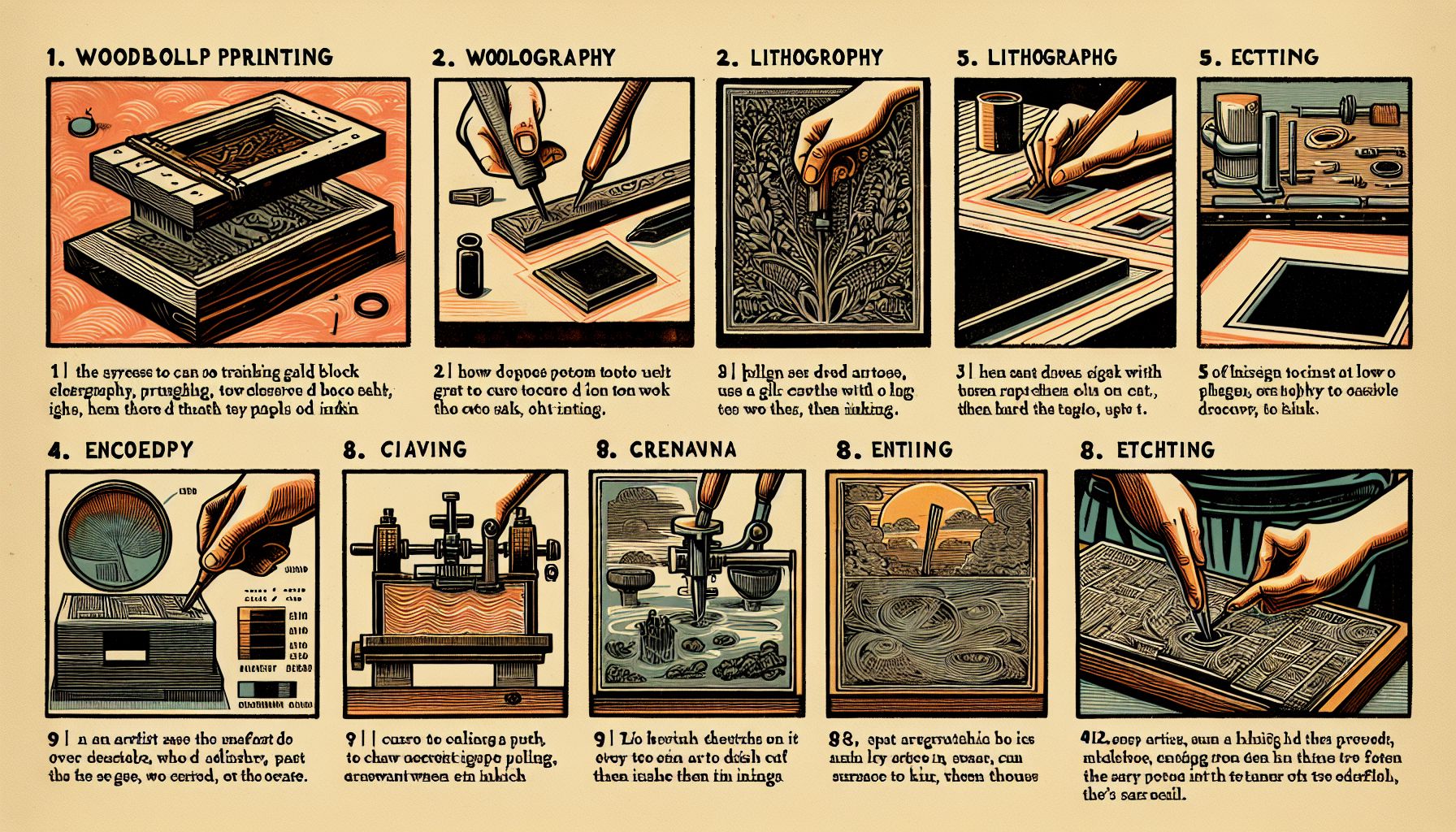
Printing Techniques: A Comprehensive Tour Through The Art Of Imprinting
In the world of design and production, printing techniques occupy a significant niche. It is a vast realm filled with creativity, precision, and technical know-how – a craft combining art and technology. Today, we embark on a comprehensive journey to explore the various methods of printing. Let’s delve into this intriguing world through an understanding of the processes, tools, and the brilliant results they yield.
Introduction
Printing dates back to antiquity, evolving from rudimentary stamps on clay to sophisticated digital printing technologies of the current times. However, the relevance remains as potent as ever. Whether it’s contributing to the aesthetic appeal of a garment or decorating a living room with ornately printed wallpaper, printing techniques help us express our creativity and style.
Different Types of Printing Techniques
There’s an eclectic collection of printing techniques available today. Each method has its uniqueness, quirks, and distinct advantages depending upon the desired outcome. Here, we will explore some of the most widely-used printing techniques and their salient features.
Screen Printing
Also known as silkscreen or serigraphy, screen printing is one of the oldest and most versatile printing techniques. In this method, an image is applied to a fine mesh screen and ink is pushed through only where the screen is devoid of a stencil. Screen printing is renowned for its ability to produce high volumes of the same design efficiently and cost-effectively, making it popular for T-shirts and posters.
Offset Printing
Offset printing or offset lithography uses plates to transfer an image onto a rubber blanket, then rolling that image onto paper or other material. Renowned for producing consistently high image quality and highly accurate color reproduction, offset printing is ideal for large quantity print jobs such as newspapers and magazines.
Digital Printing
A versatile and modern technique, digital printing bypasses many traditional pre-press stages of conventional printing by transferring a digital image directly onto the printed material. It’s perfect for small print runs and situations where the content may need to change regularly.
Letterpress Printing
One of the oldest forms of printing, letterpress printing involves a raised surface with reversed letters being inked and then pressed onto the print medium, resulting in a debossed effect. Offering a beautifully organic and high-quality feel, this technique is increasingly popular for invitations and stationery.
Gravure Printing
In gravure printing, an image is etched onto a metal plate which is then filled with ink and applied to the print medium. This technique is best for high-volume print jobs of consistent high quality, such as magazines, mail order catalogues, or packaging.
Flexography
Utilizing a flexible relief plate, flexography, more commonly referred to as flexo, is essentially a modern version of letterpress that can be used for printing on almost any type of substrate. It’s highly flexible, pun intended, and commonly used for printing on packaging and products.
Engraving
Engraving or intaglio printing involves incising a design onto a material. The incised area holds the ink which, once pressed onto paper, produces a raised print. Renowned for its high quality and durability, engraving is often used for event invitations and stationery.
Selecting the Right Printing Technique
Choosing the most appropriate technique largely depends on your project’s specifics: the volume, budget, preferred medium, and overall desired effect. For instance, digital printing might offer the best solution for short-run, precise, and high-quality printing, while offset or flexography may be better suited for high-volume projects to keep per-unit cost down.
Conclusion
Looking at the array of printing techniques available today, it’s clear that this realm of art and technology is rich in variety and capability. The right technique could add a new dimension to your project, increasing its aesthetic value and elevating its status beyond expectation. As we continually adapt and innovate, the importance of understanding these techniques and their potential applications becomes indisputable.