
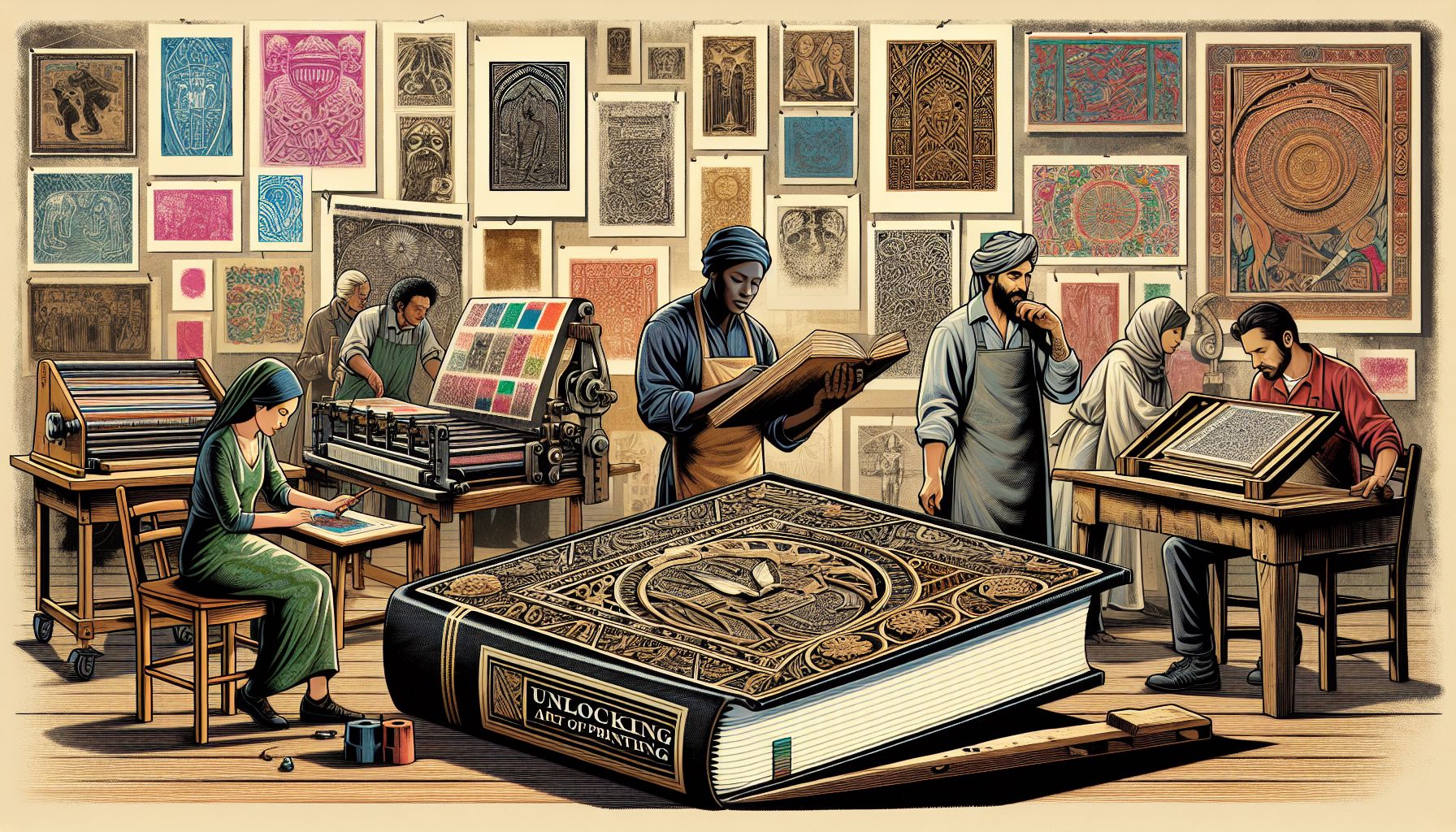
Unlocking the Art of Printing: Top Techniques Explained
Printing has been an essential part of human civilization. From ancient woodblock printing to our modern digital printing, the art and science of printing have grown exponentially, creating a myriad of impressive techniques that significantly impact numerous aspects of our lives. This article aims to deepen your understanding of various printing techniques, their unique properties, and how they contribute to the world of print.
The History and Evolution of Printing Techniques
In the beginning, printing was a painstaking process, where every word or image had to be carved onto blocks of material for reproduction. The invention of movable type printing by Johannes Gutenberg in the mid-15th century revolutionized the concept, leading to the proliferation of books and, eventually, the spread of knowledge and ideas. Throughout the centuries, the continuous pursuit of efficiency and quality has led to the birth of many printing techniques, each with its unique set of benefits and applications.
Letterpress Printing
This classic printing technique is all about creating an impression. Injection-molded using lead-based alloy, the raised surface of a metal plate is inked and pressed onto the paper, creating a beautifully embossed effect. This method is now often used for high-quality, bespoke stationary like wedding invitations or business cards.
Lithography and Offset Printing
Lithography originates from the Greek words ‘lithos’ meaning stone, and ‘graphien,’ which means to write. The original process involved drawing an image with an oil-based substance on a smooth limestone surface, then applying water onto the stone. Once the stone is inked and pressed onto paper, the ink sticks only to the oil-based drawing.
Offset printing is a later evolution of lithography, where the image is first transferred (‘offset’) onto a rubber blanket and then onto paper. This technique can produce high quality, sharp, and clean images, and is commonly used in mass-produced print works like newspapers, magazines, brochures, and stationery.
Screen Printing
This method, also known as silk screen, serigraphy, and serigraph printing, involves creating a stencil (printers call this a “screen”), and then using it to apply layers of ink on the printing surface. Each color is applied using a different stencil, one at a time, combined to achieve the final look. Screen printing is useful for printing designs on fabric, wood, glass, metal, and plastic and is widely used in printing posters, labels, signage, and artwork.
Digital Printing
Harnessing the power of technology, digital printing techniques imprint images onto surfaces using digital files such as PDFs. This technique doesn’t require a printing plate, and can include inkjet or laser printers that deposit pigment or toner onto a variety of surfaces. Digital printing is excellent for highly detailed images, producing sharp, vibrant print outs with high resolution. It is especially suitable for short-run print jobs, personalized printing, and for producing print-on-demand materials.
Gravure Printing
Also known as rotogravure, this technique is a type of intaglio printing process, which involves engraving the image onto an image carrier. In gravure printing, the image is engraved onto a cylinder because, like offset and flexography, it is a roll-to-roll process. Gravure is notable for its exceptional quality and remarkable density range. It also has long been favored for high-volume work such as newspapers, magazines, and packaging.
Fleoxography
Flexography or flexo is a modern version of letterpress and can be utilized on almost any type of substrate, including plastic, metallic film, cellophane, and paper. It is widely used for printing packaging and labels, but also suitable for banners, wallcoverings, and billboard advertisements. Although flexo printing is not as quality-conscious as gravure or offset printing, it is an effective solution for many kinds of print tasks.
Future Trends of Print Technology
Just as the static blocks of yesteryears have given way to dynamic digital files, the print technology of tomorrow will likely go beyond the flat plane of paper. Already, we’ve seen the rise of 3D printing, where physical objects can be printed from digital designs. Augmented reality is also making waves, enabling print materials to interact with digital elements. As technology continues to evolve, so do the possibilities for print.
Conclusion
Printing techniques have been with us for hundreds of years, still, they continue to evolve, producing consistently better results, more efficiently. From letterpress to digital printing, each method offers a unique set of advantages and applications, making different aspects of our visual world possible. It’s fascinating to recognize the versatility these techniques offer, and we can only look forward to the future of printing with anticipation and excitement.