
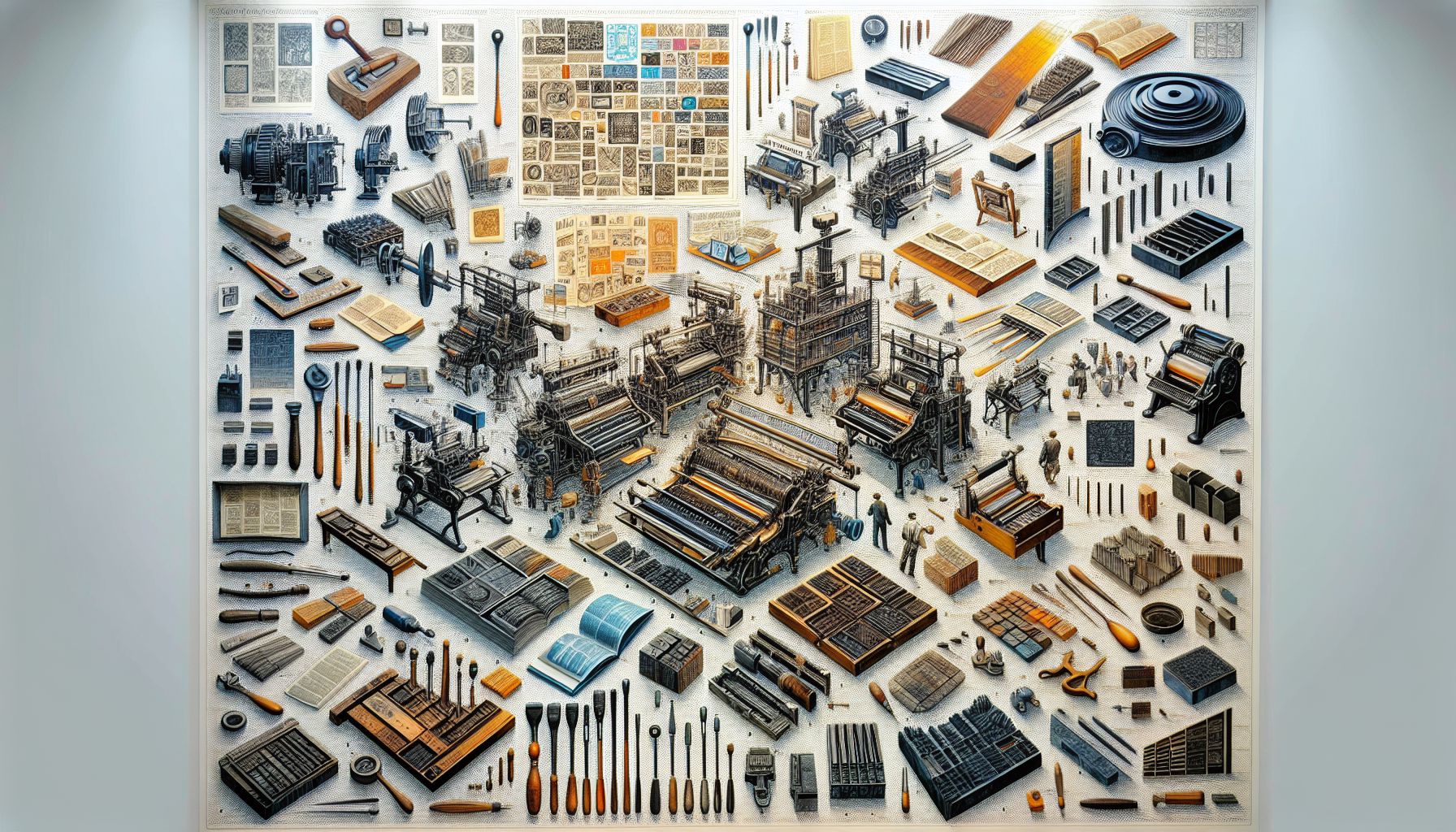
Decoding the Mystery of Printing Techniques: A Deep Dive into the World of Print
Throughout centuries, the transformation in communication methods has been remarkable. Especially the process of printing which has been evolved extensively and so has the precision in this art. Today, we are able to reproduce anything using printing techniques, and it goes way beyond printing newspapers and books. So, walk with me through the wonderful journey while we decode the mystery of these printing techniques.
Traditional Printing Techniques
Before diving into the sea of modern technologies, it is important to have an understanding of how we got here. Some of the ancient methods are still in use today.
Lithography
Invented in late 18th century by Alois Senefelder, Lithography is based on the simple principle that oil and water don’t mix. In this process, an image is drawn with a greasy material onto a lithographic limestone plate. Then, a water-based solution and a greasy ink are applied. The ink sticks to the drawn image while the water repels it. This method was extensively used for printing artwork and posters in the 19th and 20th centuries.
Letterpress
The most oldest and traditional form of printing, Letterpress involves text and images being carved onto a wooden or metal plate. The plate is inked and then pressed onto the printing surface, transferring the image or text. This form of printing is known for the rich tactile and high-quality results.
Gravure
Also known as rotogravure, this technique uses a rotating drum wrapped with the printing cylinder. Tiny cells are etched onto a copper cylinder for each color, which hold the ink. The cylinder rotates at high speed transferring the image onto the paper. This type of printing guarantees high quality images and is commonly used for magazines, packaging, and other large-volume printing products.
Modern Printing Techniques
With the evolution in technology, printing has become more sophisticated and cleaner. Modern printing techniques can transfer images to a variety of materials with unparalleled precision and repeatability.
Offset Printing
Known for high-quality print, Offset printing is the most commonly used technique today. In this method, an image is burnt onto a plate which is then transferred (or offset) onto a rubber blanket and finally to the printing surface. The process can use either coldset or heatset, depending on the type of ink used. The method is suited for large volume printing products ensuring sharp, clean, and high quality results.
Digital Printing
A revolutionary technique that has transformed printing, Digital Printing eliminates the need for a printing plate. The images are input into the computer and printed directly onto the surface. The high-quality output and the capacity to easily tweak images make this printing technique the dominant method in the industry today. There two types of digital printing, inkjet and laser.
Screen Printing
Also known as serigraphy, Screen Printing employs a stencil-based printing process where ink is forced through a mesh screen onto the printing surface. Each color is applied using a different stencil. With its versatility across various materials, screen printing is popularly used in the creation of posters, signage, textiles, and more.
Flexography
Flexographic printing, or flexo, is a type of rotary relief printing that uses flexible printing plates. These plates are typically made of rubber or plastic. Flexo printing is commonly used for packaging, labels, newspapers, catalogues, and more due to its high-speed production capabilities and ability to print on a large variety of substrate materials.
Future of Printing
With advancements in printing technology such as 3D printing, Augmented Reality (AR), and personalization, the future of printing seems to be more exciting than ever. 3D printing has already shown potential in various fields such as medical, automotive, and aerospace industries. AR is reshaping print marketing by bridging the gap between print and digital media. Personalization in print is taking customer engagement to new heights.
Conclusion
So, there you have it. The art and science of printing has come a long way. From traditional lithography to modern digital printing and the exciting future prospects. Each technique has its own unique characteristics, advantages, and drawbacks. Understanding these printing techniques not only empowers us in making informed choices for our printing requirements but also helps us appreciate the meticulous effort and skill that goes behind each print.
Printing technology has played a key role in the revolution of information exchange. Undoubtedly, it will continue to evolve and influence the way we communicate, creating new possibilities and opportunities. The importance of being updated and aware about these technologies and methodologies cannot be overstated, both from a consumer and a business perspective.
Overall, the world of printing techniques is a fascinating study of art, science and technology coming together, a testament to the endless ingenuity of human mind.