
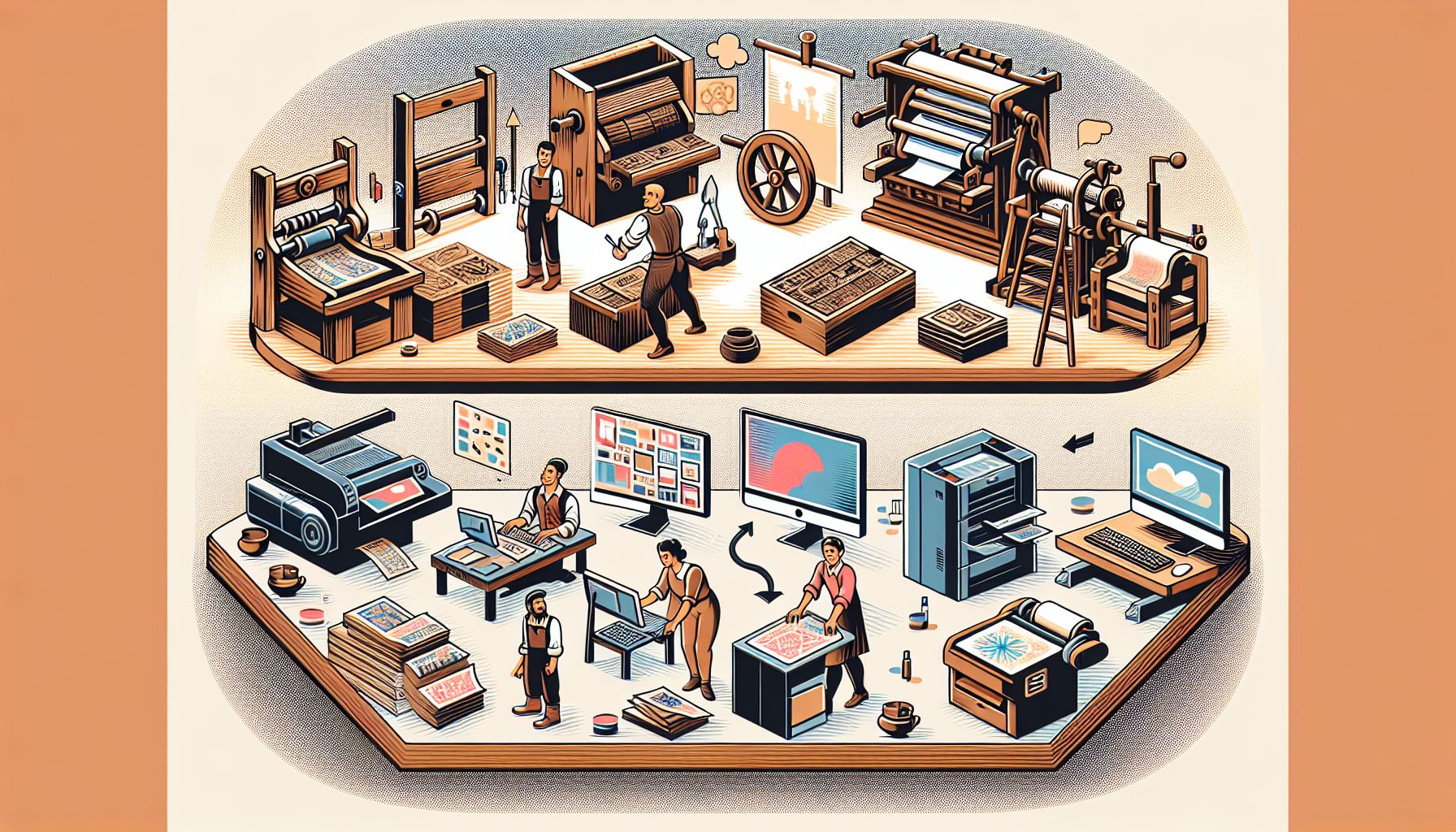
A Deep Dive into Modern and Traditional Printing Techniques
Printing techniques have been part of human civilization for thousands of years, dating back to ancient Mesopotamia. They underwent several transformations over time, reflecting human innovation and creativity. This post will delve into the fascinating world of printing, covering both traditional and modern techniques, and exploring their unique characteristics, usefulness, and impact on today’s commercial, artistic, and industrial landscapes.
Introduction to Printing Techniques
Printing techniques refer to methods employed to reproduce texts and images, typically using ink on paper and other materials through a printing press. It is a fundamental part of the publishing process. Besides the popular digital printing we see in our modern world, several traditional printing techniques were used in the past and are still applicable today in some artists and printing enthusiasts.
Three of the most important traditional techniques include letterpress, intaglio, and lithography, each with their unique attributes and effects. On the other hand, technological advancements have brought about modern techniques such as digital printing and 3D printing.
Traditional Printing Techniques
Letterpress Printing
Letterpress printing, a technique dating back to the 15th century, is considered one of the earliest forms of printing, made popular by Johannes Gutenberg. It involves arranging metal or wood type letters into phrases or paragraphs, inking those letters, and then pressing them against paper to create an impression.
One of the unique aspects of letterpress printing is the resulting text’s ‘relief’ effect where the words seem to be raised off the page. This method is popular today for making high-end invitations, greeting cards, and business cards where a touch of elegance and artistry is appreciated.
Intaglio Printing
Intaglio printing is an umbrella term referring to printmaking techniques where the image is incised into a surface, known as the matrix or plate. When these incised lines are filled with ink and the surface wiped clean, the paper pressed onto it carries off the ink from the incisions, creating a print.
Intaglio techniques, which include etching, drypoint, mezzotint, and aquatint, are excellent for creating highly detailed and tonally rich prints. These methods are mostly used today for making fine art prints.
Lithography
Lithography, first invented in the late 18th century, relies on the repulsion between water and oil-based substances. The process begins with drawing an image with an oil-based medium on a limestone or metal plate, then treated with a mixture of acid and gum arabic, etching the surface where no image exists. Ink is then applied, adhering only to the drawing, allowing the transfer of the image onto paper when passed through a press.
Lithography is beloved for its capacity to produce beautiful tonal gradients, making it the favored method for printing artwork that requires delicate and subtle color variations.
Modern Printing Techniques
Digital Printing
Digital printing is the standard method used in most home and office printers today. It involves turning digital images into physical prints by taking digital files and converting them into printable formats. The most common types of digital printing are inkjet and laser printing.
Digital printing excels in speed and cost-effectiveness for small batch runs, which makes it perfect for most commercial and personal needs. One of their unique strengths is in printing variable data, where elements (text, graphics, etc.) can be changed from one printed piece to the next without slowing down the print process.
3D Printing
3D printing, also known as additive manufacturing, is a technique that creates three-dimensional objects from digital models. This process involves successive layers of material being laid until the object is shaped.
In recent years, 3D printing technology has revolutionized many industries including healthcare, engineering, and fashion, due to its potential to create complex, custom, and functional designs with ease and speed.
Conclusion
No one technique is necessarily superior to another as each serves a different purpose, from mass-producing commercial materials, publishing books, creating fine arts to building detailed 3D models. Traditional printing techniques provide beautiful and unique aesthetic effects not easily replicated by modern methods, thus are still greatly valued in fine arts. On the other hand, modern printing advancements have democratized print, making it accessible to nearly everyone with a computer and printer.
As consumers, we should appreciate how these printing techniques have evolved and shaped our relationship with print media. And for artists, designers, and creators, understanding these methods can open up a world of possibilities for self-expression and communication. The world of printing, both traditional and modern, is a fascinating testament to human creativity and ingenuity.