
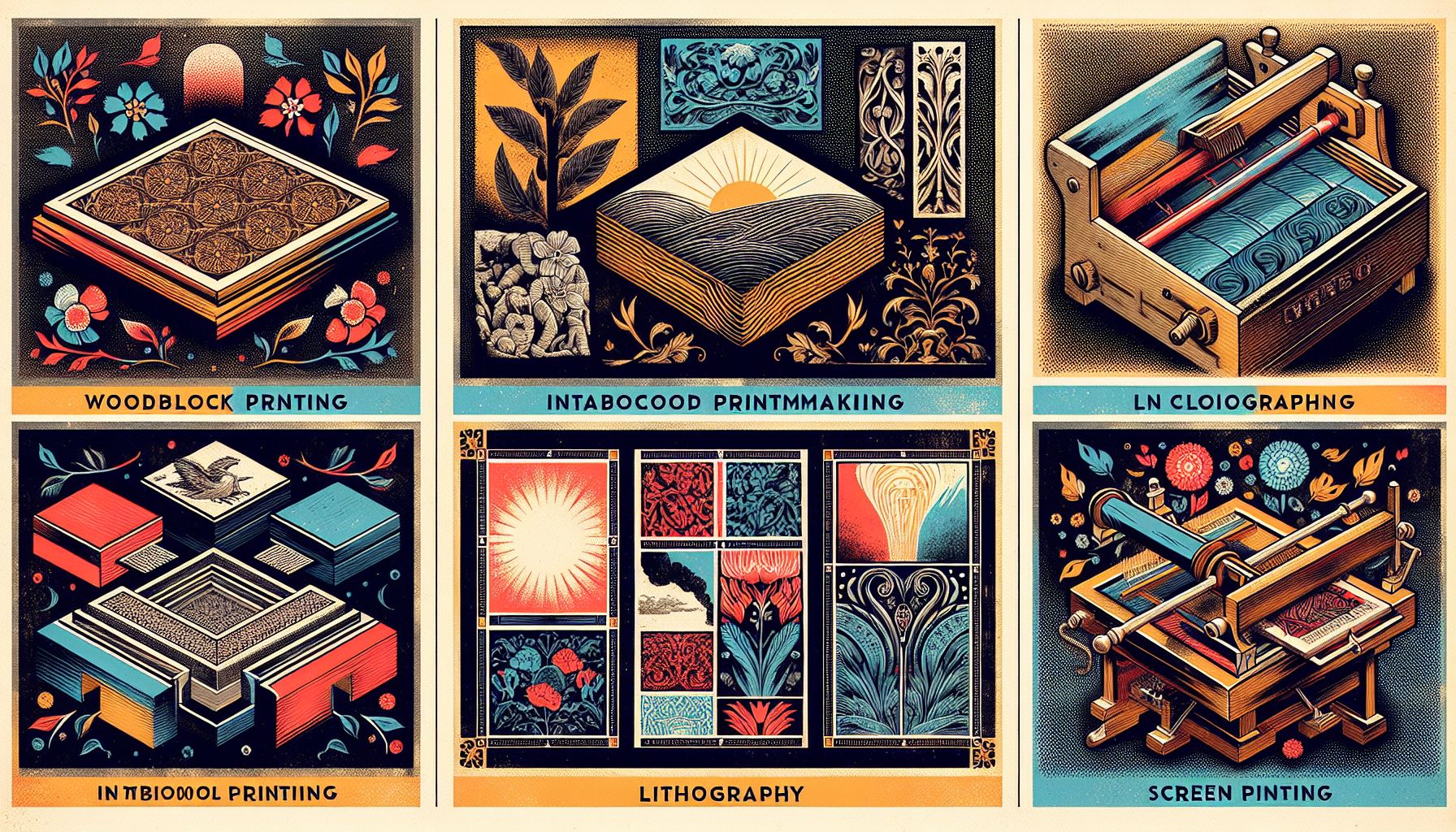
Unleashing the Power of Creativity: A closer Look at Different Printing Techniques
The wave of technology revolution has been rapid, and nothing proves this more than the field of printing. From ancient papyrus scrolls to futuristic 3D printing, the evolution has been drastic. In this quest for progress, different printing techniques have been developed, each with its unique appeals and challenges. Whether you are an established designer, an upcoming artist, or the curious mind fascinated by the fusion of creativity and technology, understanding these techniques is crucial. This article offers a close-up look into different printing techniques, how they function, their advantages, and limitations.
Letterpress Printing
Being one of the oldest forms of printing, Letterpress Printing, also known as relief printing, gradually pushed its way back into the limelight, thanks to its distinctive and tactile finish. Invented by Johannes Gutenberg in the mid 15th century, this technique uses a process where type and images are raised and then pressed into the paper. The resultant product is a print with an impression you can feel, thus creating a unique visual effect.
While letterpress printing produces outstanding results, it does require a significant amount of time and labor. From creating the plates to setting them up and then the actual printing, the entire process is highly involved. However, for those who have a keen eye for artistic excellence, the laborious process is well worth the outcome.
Offset Lithography
If you need to produce a significant volume of high-quality prints with sharp, clear images, then Offset Lithography is the go-to technique. Whether it’s books, newspapers, stationery, brochures, or magazines, the versatility of this technique is truly unmatched.
Offset Lithography works by transferring an image from a plate (usually made from aluminum) onto a rubber blanket and then onto the printing surface. The term ‘offset’ refers to the fact that the image doesn’t go directly onto the paper, but rather it is offset onto another roller before hitting the final print media.
The initial setup cost for offset printing can be quite high, but this often deters small quantity prints. However, with large quantity prints, the cost per unit drops considerably, making it an effective and cost-efficient printing method for large scale requirements.
Digital Printing
Digital printing operates similarly to a large-scale office printer, utilizing toners (in laser printers) or inks (in inkjet printers) rather than traditional printing press plates. It’s a newer process that applies the digital image directly to various media.
This technique shines bright when it comes to short-run, quick-turnaround situations. Since it requires less setup than offset printing, with no need for printing plates, it allows for cost-effective small print runs. However, the cost per page remains constant regardless of the quantity. The digital print’s quality has drastically improved over the years, rivaling offset print in many cases but still, some very high-quality projects might desire offset print’s level of detail.
Engraving
Engraving thrives on sophistication and prestige. Originating from the process used in traditional paper documentation like certificates, bonds, and other official documents, engraving offers a level of quality and elegance that other printing methods find hard to match.
Engraving involves etching the text or design into a copper plate, filling the incisions with ink, wiping the plate clean, and then pressing the paper onto the plate with considerable pressure. The result is a print with crisp edges and details, with slight indentation on the back of the paper.
Although a highly respected process for its print quality, engraving is labor-intensive and time-consuming, leading to higher cost and longer turnaround times.
Screen Printing
Popular with graphic designers for reproducing vivid artworks onto textiles like t-shirts and banners, screen printing, or silk-screening, employs a mesh to transfer ink onto a substrate, except for areas which are made impermeable to the ink by a blocking stencil.
Although screen printing is labor-intensive, it offers vital advantages such as durability due to the thick layer of ink applied and larger ink volume, which gives vivid colors even on dark surfaces.
Conclusion
Printing techniques have brought immense diversity into the art and design sphere, each unfolding a distinctive facet of creativity. Through understanding these various techniques, not only can one appreciate the process behind these beautiful creations, but also make informed decisions continuously pushing the boundary of what is possible. Whether it’s the tactile finish of Letterpress, high volume production power of Offset Lithography, the convenience and speed of Digital printing, sophistication of Engraving or the vivacious Screen Printing, the right technique is your key to unlock and unleash the power of creativity.