
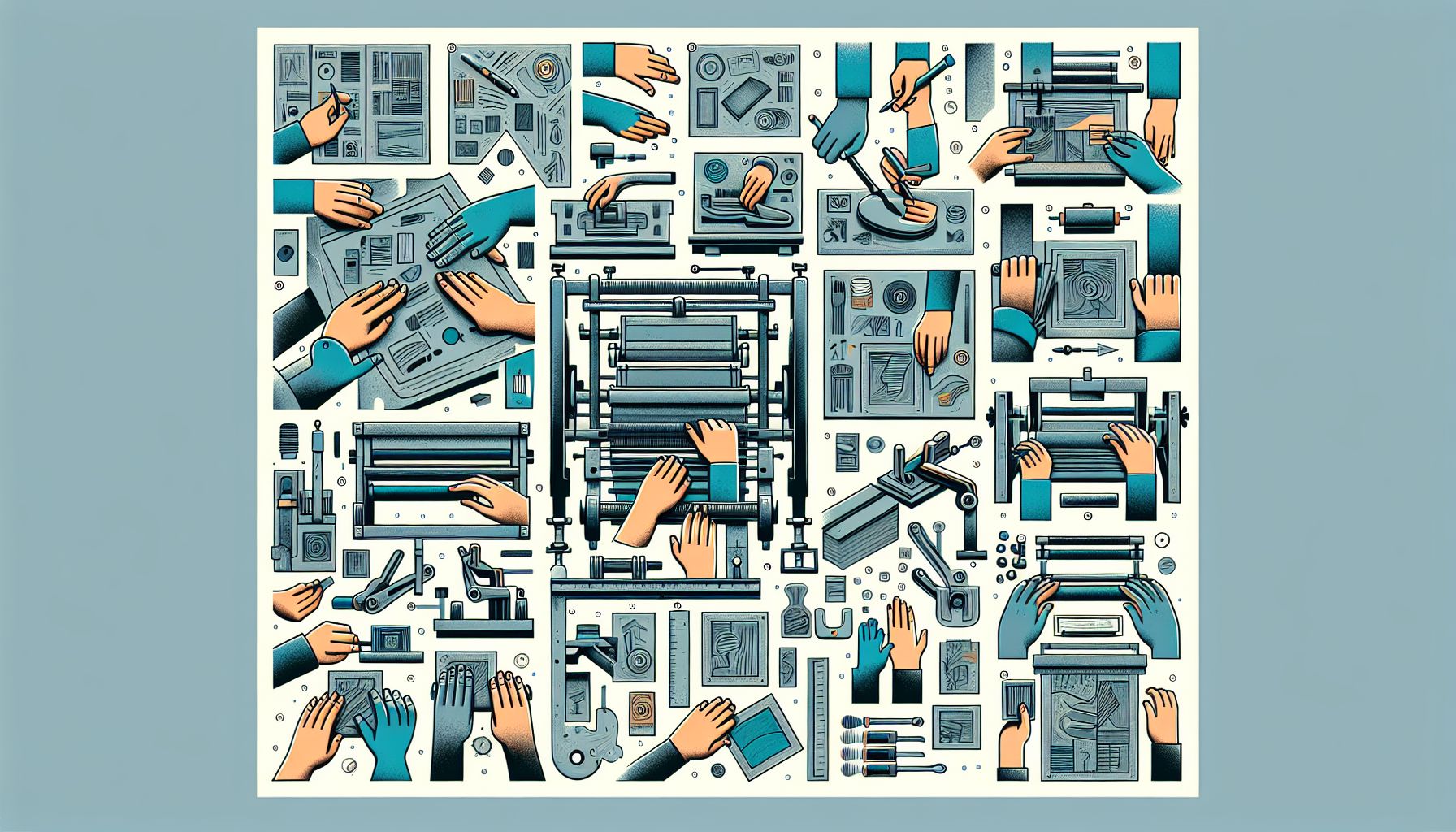
An Insider’s Guide: Exploring the Printing Techniques Landscape
Printing techniques have evolved significantly since the birth of the first printing press in the 15th century. From traditional processes that require great skill and craft to innovative digital technologies that offer unprecedented precision and convenience, the spectrum of printing techniques is vast. This blog post will be a detailed exploration of various printing practices, explaining their distinct characteristics, benefits, and applications.
Understanding the Basics
Before diving into specific methods, it’s essential to grasp the rudimentary elements that underpin all printing techniques.
Inks
Inks are substances used to deliver color to the printing surface. They can vary in their makeup depending on the specific printing technique and desired outcome. Different inks react differently to various printing materials, affecting the final appearance of the work.
Plates
Plates serve as the stencil for printing. These plates bear the image or text to be reproduced an transferred onto the material. Plates can be created from various materials, including stone, aluminum, and, more recently, light-sensitive polymers.
Press
The press applies the ink to the plate, then transfers the image onto the surface. There are different types of presses for different printing methods.
The Parade of Printing Techniques
With basic groundwork laid, let’s delve into a survey of the primary printing techniques.
Offset Lithography
Offset lithography is perhaps the most widespread and versatile printing technique. Ideal for high-volume print jobs, offset lithography is most commonly used for magazines, newspapers, brochures, books, and stationery.
In this process, a plate with the image is inked and offset (hence the name) onto a rubber blanket. The image is then transferred onto the paper or material from the rubber blanket. This method is praised for its cost-effectiveness for large runs and the high-quality outcomes it produces.
Digital Printing
Propelled by the rise of computer technology, digital printing has evolved into a dominant force in the industry. Because it eliminates the need for plates, digital printing enables quicker setup times, making it an excellent option for short runs and on-demand prints.
The two primary types of digital printing are inkjet and laser. Inkjet uses tiny droplets of ink to create the image, while laser printers use toner and an electrostatic charge. Digital printing is popular for its cost-effectiveness on short run prints, customizable option and speed of delivery.
Flexography
Flexography, sometimes referred to as “flexo,” was formerly used for simple packaging jobs. However, thanks to improvements in print quality, it’s now employed in high-quality packaging, wrappers, and newspapers. In flexography, a rubber or light-sensitive polymer plate is inked and pressed directly onto the material, creating a raised image.
Screen Printing
Considered one of the earliest print techniques, screen printing still enjoys popularity in today’s digital age. Also known as silkscreen or serigraphy, this method involves passing ink through a stencil or template that has been stretched over a frame with a woven mesh. Screen printing is especially favored for t-shirts and other fabric prints, posters and fine arts.
Gravure Printing
Gravure, or rotogravure, involves etching an image onto a copper cylinder, which is then inked and pressed to the paper. Known for its high-speed, continuous-tone, high-quality image reproduction, gravure printing is traditionally used for large-volume runs such as magazines, mail order catalogues, and fine art reproduction.
The Journey Ahead: Printing and Its Future
From the traditional craftsmanship of screen printing to the digital finesse of laser and inkjet techniques, the world of printing is as broad as it is deep. Each technique brings to the table robust capabilities and benefits, which contribute to the diversity of this craft and trade. Depending on various factors like speed, detail, cost, quality, and production volume, businesses, artists, and consumers can pick a printing technique that tailors to their specific needs.
In an ever-evolving industry, it is essential to remain abreast of emerging trends, technologies and techniques- who knows what the future of printing holds? Whether it’s a resurgence of nostalgic techniques or the advent of completely novel methods, one thing remains certain: print is here to stay, and it’s always on the move. So, let’s keep moving with it, exploring, learning and applying the best that printing has to offer.