
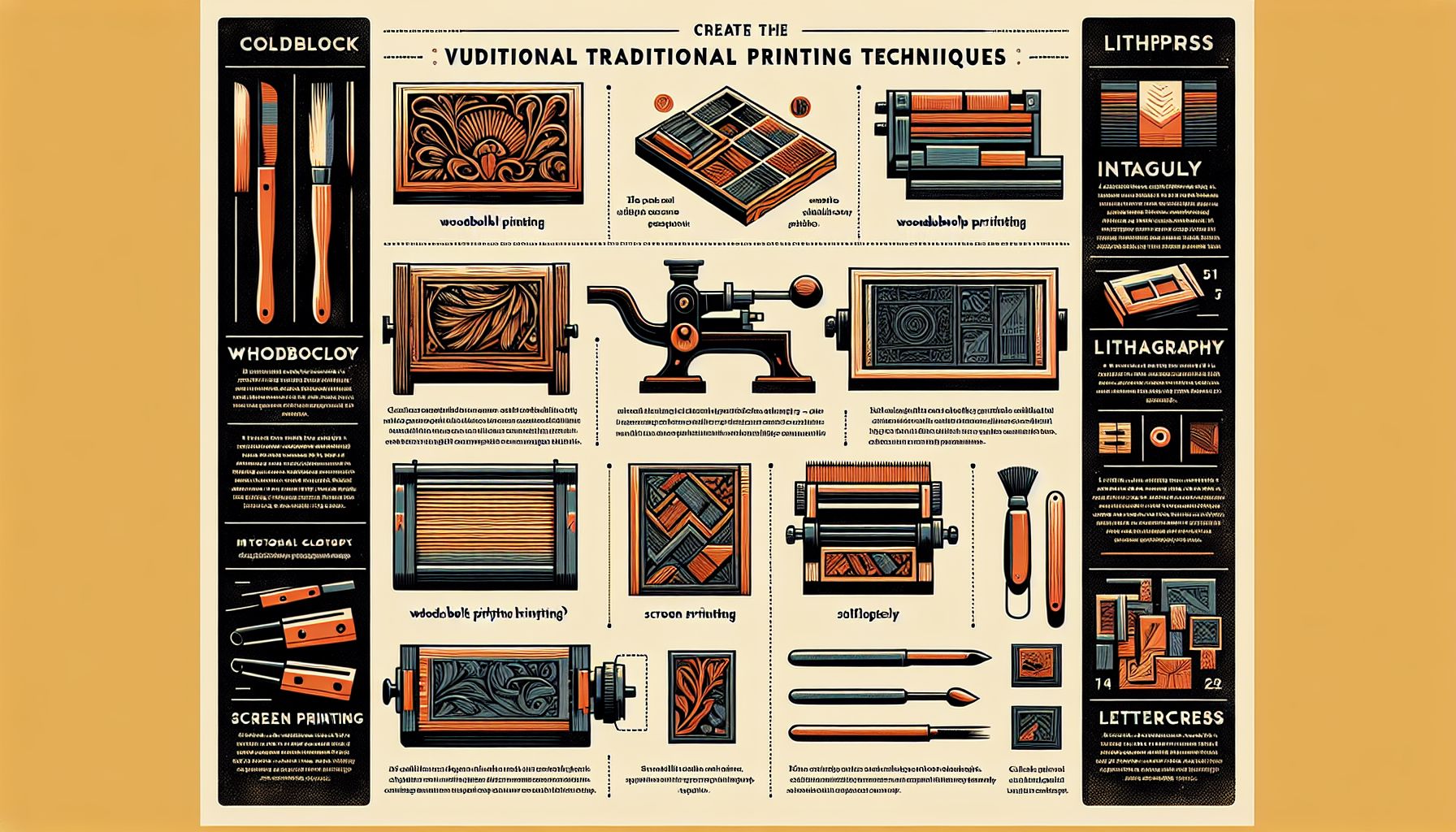
Understanding The Various Printing Techniques: A Comprehensive Guide
Printing is an essential component in a wide array of sectors, including education, entertainment, advertising, and manufacturing. Although many of us interact with printed materials daily, few people understand the diverse techniques used in their production. This article will delve into various printing techniques, shedding light on their operations, applications, and unique benefits.
Introduction: The Critical Role of Printing Techniques
Printing techniques have a monumental role. They help maintain records, propagate knowledge, and even play a huge part in business branding. Over time, multiple printing methods have surfaced, each adapting to the progressive demands of technology and society.
Different Types of Printing Techniques
A plethora of printing techniques exist today, each designed for particular uses and providing distinctive results. These techniques vary in complexity and affordability, which directly influences your final product’s quality and appeal. Here are some of the most commonly used types:
1. Offset Lithography
Arguably the most common printing technique, offset lithography, is renowned for its high-quality output and cost-effectiveness. This process involves transferring an inked image from a plate to a rubber blanket, then onto the printing surface—the media can range from paper, cardboard, and plastic.
Offset lithography is widely used in mass production, such as in magazines, newspapers, and brochures, thanks to its efficiency.
2. Digital Printing
Digital printing is a modern technique skyrocketing in popularity due to its versatility and excellent color controls. Instead of using plates, digital printing directly applies the artwork onto the print media. The technique excels in small batch production and personalized printing projects, making it ideal for flyers, posters, or personalized direct mail.
3. Screen Printing
Screen printing, or serigraphy, is a technique that relies on mesh screens to transfer ink onto the print media. Each color used in the artwork requires a different screen, making the method quite labor-intensive. However, the technique’s compensation comes in the form of vibrantly colored prints that are highly durable.
Screen printing is typically used in garment decoration, poster production, and in creating fine art.
4. Flexography
Flexography, sometimes referred to as flexo, is a high-speed printing technique mainly used in packaging. It utilizes flexible relief plates and quick-drying inks, rendering it ideal for printing on various substrates like plastic, metallic films, cellophane, and paper. Flexography is predominantly used in packaging for products such as food bags, plastic bags, milk and beverage cartons, disposable cups, and labels.
5. Gravure Printing
Also known as rotogravure, this technique is best suited for high-volume printing like newspapers, magazines, and packaging. It involves engraving an image onto a copper cylinder, filling the indents with ink, and transferring the image onto the print media. The quality of Gravure printing and its longevity make it a favorite choice for large orders.
6. Letterpress Printing
As one of the oldest forms of printing, letterpress printing gives a vintage feel to print materials. The method involves setting type and motifs onto a tray. They’re then inked and pressed onto the print surface. The indentations create a unique, tactile experience for the viewer. Letterpress is usually used for high-end invitations, business cards, and stationery.
What Drives the Choice of Printing Technique?
The selection of a printing technique is primarily influenced by factors like print volume, budget, the type of print media, color requirements, desired quality outcome, and turnaround time. Acknowledging these factors will help you make an informed choice and ensure optimal results in your projects.
For instance, digital printing would be a prudent choice for short-run, time-sensitive projects with variable data. On the other hand, offset lithography would make more financial sense for large orders as the unit cost goes down with the increase in quantity.
Conclusion: A Technique for Every Print Need
In conclusion, the printing industry houses an array of techniques, each boasting its unique advantages. By understanding each technique’s capabilities and best applications, you can decide the most suitable one for your projects.
Whether you seek vibrant designs on your event posters, a small-scale customized direct mail campaign, or thousands of crisply printed newspapers, there’s a printing technique ready to meet your needs. As we advance towards a more digital era, the merging and evolution of printing techniques are bound to yield even more exciting and efficient ways of bringing our ideas to life.