
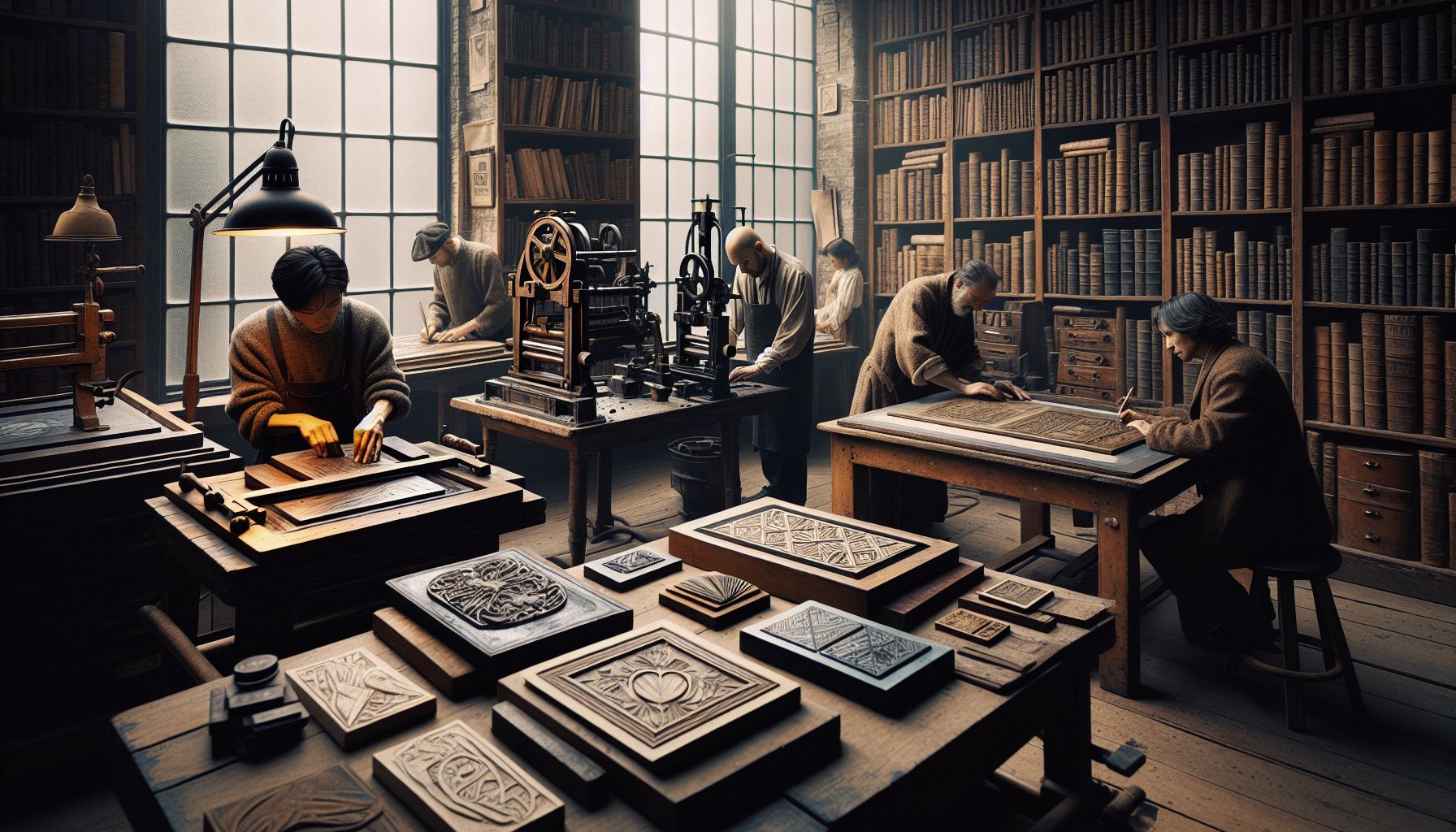
The Art of Printing: Exploring Different Techniques
From the earliest days of human civilization, the desire to communicate and preserve information has driven the development of various printing techniques. Over time, these techniques have evolved and diversified, offering a world of possibilities in the realm of art, design, and communication. In this blog post, we will delve into different printing techniques, their characteristics, and the incredible outcomes they can achieve.
Introduction to Printing Techniques
Printing techniques encompass a wide range of processes used to reproduce images, text, and designs onto various surfaces. Whether you’re an artist, designer, or simply someone curious about the world of printing, understanding these techniques can enrich your appreciation for the unique characteristics each one brings. Let’s explore some of the most popular printing techniques in use today.
1. Relief Printing
Relief printing is one of the oldest techniques known to mankind. It involves carving away parts of a block or plate to create raised surfaces, which are then inked and pressed onto paper or another medium. Woodcut and linocut are common relief printing methods.
Woodcut Printing: Woodcut printing is accomplished by carving an image onto a block of wood. The raised areas, left behind after removing the non-image areas, are then inked and pressed onto paper. The wood’s natural grain often adds a distinctive texture to the final print, giving each piece a unique character.
Linocut Printing: Linocut is similar to woodcut, but instead of wood, a block of linoleum is used. Linoleum’s soft and smooth surface allows for greater detail and precision in carving. Linocut prints often have a clean and bold appearance, with sharp lines and defined shapes.
2. Intaglio Printing
Intaglio, meaning “incised” or “engraved” in Italian, refers to techniques in which ink is held in the recessed areas of a plate or block. The surface is then wiped clean, leaving ink only in the incised lines or depressions. When pressed onto paper, the ink transfers, creating the desired image or design.
Engraving: Engraving involves incising a design onto a metal plate using a sharp tool called a burin. The plate is then inked and wiped, leaving ink only in the engraved lines. The pressure of the press forces the paper into the recesses, resulting in fine, detailed prints that bear the distinctive quality of engraved lines.
Etching: Etching is an intaglio technique that utilizes the corrosive action of acid on a metal plate. A wax or resin ground is applied to the plate, protecting the areas that will not be etched. The design is then incised into the ground using a needle, exposing the metal. The plate is submerged in acid, which eats away at the exposed metal. Afterward, the ground is removed and ink is applied, with the ink adhering to the etched lines. Etching allows for delicate tonal variations and is often used for artistic prints.
3. Planographic Printing
Planographic printing, also known as lithography, refers to techniques that rely on the principle of oil and water repelling each other. It involves drawing or painting with greasy materials on a smooth stone or metal plate to create the image.
Stone Lithography: Stone lithography was the original form of lithographic printing. An image is drawn onto a polished stone using an oil-based medium. The stone is then dampened, and the ink, which adheres to the greasy parts of the image, is transferred to paper. Stone lithography offers a distinctive range of tonal values and a rich surface texture.
Offset Lithography: Offset lithography is a more modern variation of lithographic printing. The image is transferred from the plate to a rubber blanket, which then applies the ink to the final printing surface. Offset lithography has become the most widely used method for commercial printing, allowing large volumes of prints with precise detail and vibrant colors.
4. Screen Printing
Screen printing, also known as silkscreen printing, involves applying ink through a fine mesh screen onto a substrate. The screen is prepared by blocking out areas that are not part of the design. A squeegee is then used to draw the ink across the screen, pushing it through the open areas and onto the paper or fabric below.
Screen printing offers a high degree of versatility, making it suitable for various materials. It allows for vibrant colors, strong contrasts, and the ability to print on both flat and three-dimensional surfaces. This technique is commonly used in textile printing, creating t-shirts, posters, and other art prints.
Conclusion
Printing techniques have come a long way since the early woodcuts and stone lithography. The myriad options available today enable artists, designers, and printers to push the boundaries of creativity. Whether you prefer the fine details of an engraved print or the boldness of relief printing, each technique has its own unique charm to offer.
Understanding these techniques not only gives us a glimpse into the rich history of printing but also allows us to fully appreciate the artistry and technical skill involved. So the next time you encounter a beautifully printed piece, take a moment to consider the technique used, and let it inspire you to explore the wonderful world of printing further.