
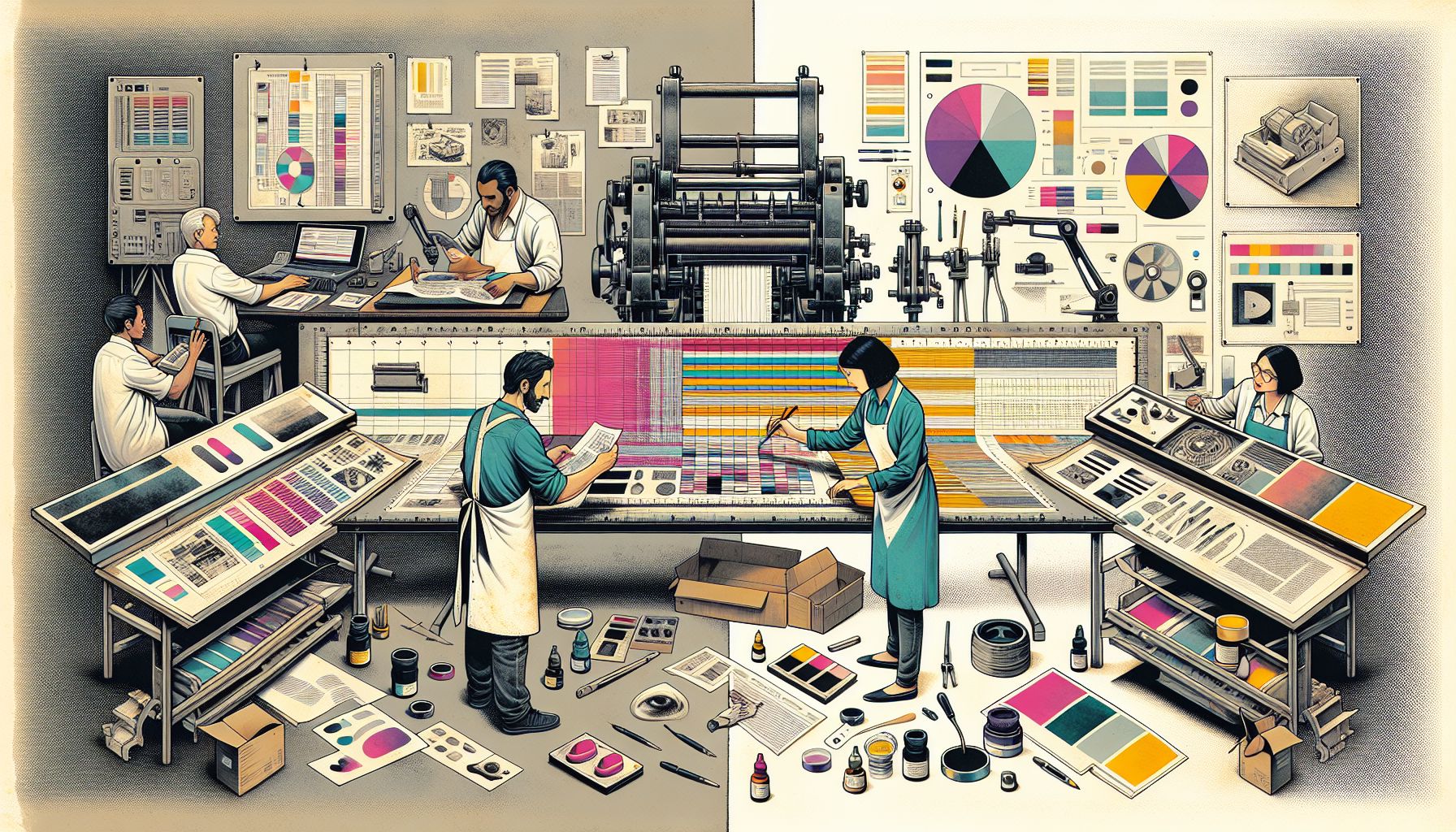
The Art and Science of Modern Printing Techniques
The evolution of civilization has always been marked by significant advancements in technology. From the creation of wheel to the internet, there have been a plethora of innovative creations that transformed our world. Among them, printing technology stands as one of the most influential innovations of humanity. The process of creating texts or images, usually on paper, has evolved greatly from its humble beginnings. This article will explore some of the most widespread modern printing techniques, discussing their functions, benefits, and potential drawbacks.
Offset Lithography
Perhaps the most common type of printing, offset lithography is a technique that is used extensively in high-volume commercial printing. This method involves the use of plates, usually made from aluminum, which are used to transfer an image onto a rubber “blanket”, and then rolling that image onto a sheet of paper.
Offset lithography is popular because it provides high-quality images and can be used on different materials, not just paper. However, the setup for offset is more considerable than that of digital printing. Hence, it might not be as cost-effective for smaller runs.
Digital Printing
As we continue to fragment our communications across multiple media channels, traditional, large-volume printing jobs are moving towards smaller but more targeted batches. These types of jobs are perfectly suited for digital printing.
Digital printing works by assembling images from a complex set of numbers and mathematical formulas. These images are captured from a matrix of dots, typically called pixels, this process is called digitising. The digitised images are then transferred to a physical surface, such as paper or merchandise. The main advantage of digital printing is very fast turnaround times and printing on-demand. While the image quality might not be as high, it’s adequate for the majority of everyday printing tasks.
Flexography
Flexography is a direct descendant of the letterpress and can be used for print runs of millions or just several hundreds. This method has become particularly popular for packaging where the quality demands are less robust. Think plastic wrap and paper bags.
Flexography uses flexible relief plates that are mounted on a cylinder. Due to its flexibility and durability, the method can be used on almost any type of substrate including plastic, metallic films, cellophane, and paper.
Engraving
The most high-quality and traditional printing technique is engraving. This is a complex process, using high-quality inks and soft high-quality cotton papers. It involves etching text or designs onto a metal plate, filling the etching with ink, and then pressing the inked plate onto the paper.
Engraving is typically used for high-end jobs where a sharp, crisp finish is desired. The output has a unique look and feel that is instantly identified as a symbol of prestige, which is why it’s commonly used for business cards of high-ranking executives and official business documents.
Conclusion
Choosing the right printing technique is crucial in ensuring the success of your print project. While the details of the methods might seem daunting at first, a skilled and experienced printer is capable of advising the most suitable method to apply, depending on the specifications of your project.
The final decision ultimately depends on several factors such as quality, time, and cost. However, given the continuous advancements in printing technology, it is quite exciting to think about what the future may bring for this age-old practice. Will 3D printing become mainstream? Will digital eventually replace traditional printing methods? Whatever the future holds, it is evident that printing will remain an essential part of our lives.