
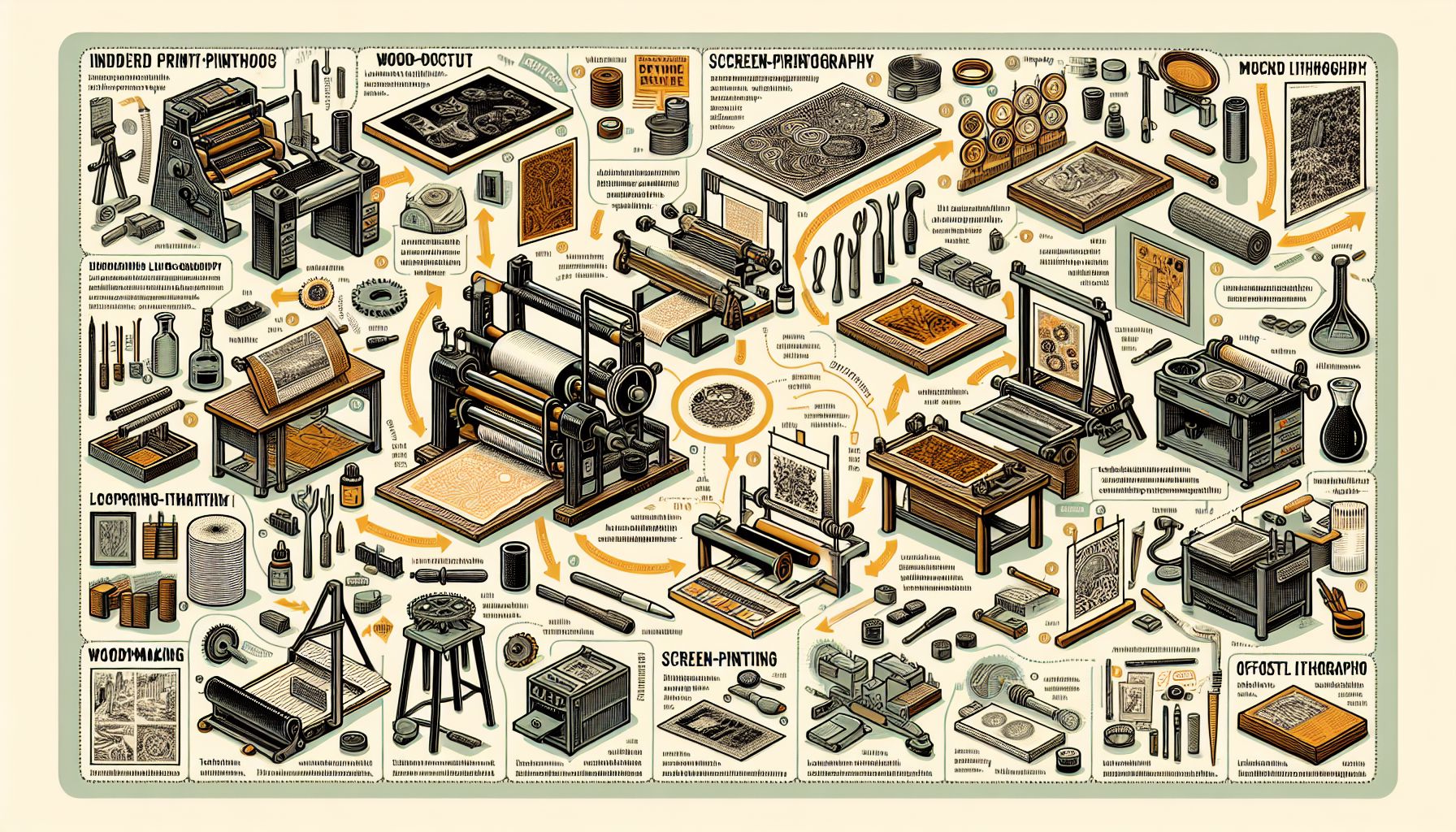
A Comprehensive Guide To Different Printing Techniques
Printing has been around for thousands of years, serving as a dominant method of communication and advancement in technology. Today, several types of printing techniques are being used around the world, each with its unique properties, advantages, and applications. This article aims to delve into the nitty-gritty of different printing techniques, from traditional methods to modern digital technologies.
Introduction
Printing is perhaps one of the most significant inventions in human history. From the ancient times of block printing on fabrics, the industry has come a long way. Staying relevant in today’s digital era, printing techniques have expanded and evolved, offering expanded possibilities. Whether you are an artist trying to bring a design to life, a business owner trying to captivate your audience with vivid and extraordinary prints, or simply a curious mind wanting to understand how words and images get on paper, this guide will help you understand various types of printing techniques and their applications.
Offset Lithography
Offset Lithography or Offset printing for short, is one of the most commonly used printing techniques, especially for high volume commercial printing. The fundamental principle lies in its process that separates oil-based ink and water using a metallic plate and rubber blanket. This method is ideal for printing smooth and detailed images or text on flat surfaces, including paper, cardboard, plastic, and metal.
Advantages:
- Produces high-quality images.
- Economical and efficient for large print runs.
- Prints on a wide range of printing surfaces.
Flexography
Flexography, often known as flexo, is a technique mainly used for packaging and label printing. It uses flexible relief plates that are wrapped around rotating cylinders on a web press. These plates are fast-drying and highly versatile, capable of printing on a variety of materials including plastic, metallic films, cellophane, paper, etc.
Advantages:
- Ideal for large runs.
- Can print on a variety of materials.
- Quick drying and high-speed production.
Digital Printing
Digital printing has revolutionized the printing world, offering quick, affordable, and high-quality solutions. There are two primary types of digital printing:
Inkjet Printing:
Inkjet printing sprays droplets of ink onto the printing surface directly from the digital file. It is commonly used for small jobs that require high amounts of detail and color variation.
Laser Printing:
Laser printing uses toners adhered to the material through heat. It generally offers faster speed and is a go-to choice for many businesses for high-volume jobs.
Advantages:
- Allows quick delivery due to a reduced setup time.
- Excellent for short to medium print runs.
- High detail precision and color variation possibilities.
Gravure Printing
Gravure printing also known as rotogravure, uses engraving on a metal plate mounted on a cylinder. The image to be printed is engraved into this plate, and the ink is filled in the depressions. This process ensures a high-quality image reproduction and is ideal for long-run, high volume applications such as magazines, catalogues, and packaging.
Advantages:
- Exceptional quality for high-volume jobs.
- Fast production speed.
- Image cells can hold a lot of ink, leading to richer, deeper colors.
Screen Printing
Screen printing is a stencil method where ink is forced onto the surface through a silk or mesh screen. It is one of the oldest printing techniques and is primarily used for printing on fabric, wood, glass, ceramics, and metal.
Advantages:
- Extremely durable, especially on fabrics.
- Prints vibrant colors even on darker surfaces.
- Can be repeated multiple times with the same stencil.
Conclusion
From traditional methods to state-of-the-art digital variants, each printing technology has offered incredible value to our society. Understanding different printing techniques can guide you to choose the most suitable method for your specific needs, whether it’s for business promotion, artistic expression, or personal use. In a world increasingly dependent on digital content, printed materials still bring a substantial, tangible, and lasting effect that digital cannot replace. With continued advancements and innovations, the realm of printing techniques is expected to evolve, adapting to changing requirements while continuing to leave a lasting impact.