
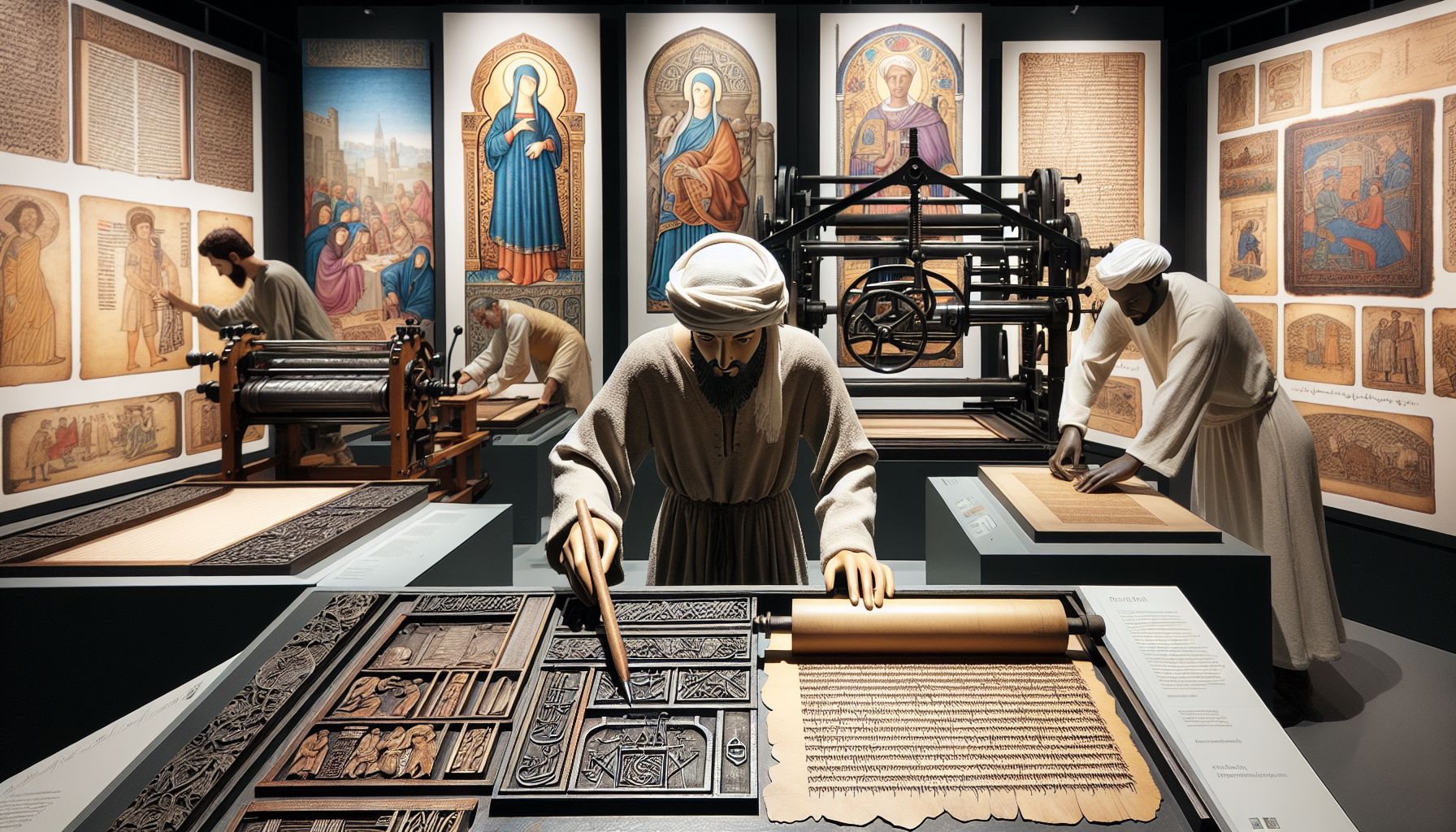
The Fascinating World of Printing Techniques
The art of printing has been around for centuries, evolving and expanding with the development of technology and the human intellect. Today, printing has grown to be more innovative and versatile than ever, offering a plethora of techniques to suit diverse needs. From traditional methods steeped in history to cutting-edge digital solutions, the world of printing is engaging and diverse. Let’s delve deep into some popular printing techniques and explore their distinctive features, advantages, and applications.
Letterpress Printing: A Nod to The Past
Arguably one of the oldest and most respected forms of printing, letterpress printing harks back to the days of Johannes Gutenberg. Despite its historic roots, it still enjoys considerable popularity among designers and typographers today for its ability to imbue every print with a unique tactile quality.
In Letterpress printing, a raised surface is inked and then pressed onto a sheet of paper. This process leaves an impression on the paper, creating a distinct texture both visually and physically. Artists and printers who value tradition, craftsmanship, and the rich textural nuance that letterpress brings to the table, often prefer this method.
Offset Lithography: The High Volume Workhorse
When it comes to large-scale, commercial print jobs, offset lithography is the go-to technique. This method utilizes a delicate balance of water and oil-based inks, which are not miscible. The printing plate, usually made of aluminum, is treated such that the image area attracts the oil-based ink, while the rest attracts the water, creating a perfect reproduction of the original image on the printing surface.
Offset lithography is speedy, efficient, and cost-effective for high volume printing, making it perfectly suited for producing newspapers, magazines, brochures, and books.
Digital Printing: The Modern Day Maverick
As a recent addition to the printing techniques arsenal, digital printing has quickly earned its stripes as a convenient, versatile, and cost-effective method. It can efficiently handle small runs and offers the flexibility to tweak and adjust the design between runs without significant time consumption or expense.
Digital printing harnesses the power of inkjet or laser printers where tiny droplets of ink are sprayed onto the surface of the paper. Its major advantages include quick turnaround times, high accuracy levels, low cost for small volumes, and the ability to personalise prints.
Screen Printing: The Color Master
If bright, vibrant colours are your priority, screen printing stands out as the best choice. This method can lay down denser inks than most, resulting in exceptionally vibrant colours, even on darker surfaces. The technique involves creating a stencil (the ‘screen’) and using it to apply layers of ink onto the printing surface. Each colour is applied using a separate stencil, making it ideal for designs with few colours.
Screen printing is a popular choice for designing posters, billboards, fabrics, and textiles due to its vivid output and versatility on different surfaces.
Gravure Printing: The Detail Dictator
Gravure or rotogravure is known for its exceptional ability to capture minute detail and produce long, uninterrupted print runs. In this process, a copper plate is engraved with a load of small recesses to hold the ink. It formerly reigned supreme for reproducing photography and other detailed, graphic designs.
While its setup cost is high, on sustained runs, the cost per unit falls, making it a viable option for high-quality magazines, mail order catalogues, and glossy packaging materials.
Flexography: Versatility and Volume
Flexography, also known as flexo printing, is a versatile process that employs fast-drying, semi-liquid inks. This method lends itself to an impressive array of surfaces, including plastics, metallic films, and non-porous substrates, which are commonly used in food packaging.
Flexo printing is unprecedented for high volumes, speedy print runs, and its ability to manage both absorbent and non-absorbent surfaces.
Conclusion: Choosing the Right Printing Technique
There’s a dizzying array of printing techniques out there, each with its strengths and weaknesses, quirks and character. Your choice should be guided by factors such as the nature of your project, volume, required quality, budget, and time frame.
Every technique tells a different story. Whether you’re a fan of the tactile impress of the letterpress or the vibrant allure of screen printing, the sharp precision of digital or the detailed finesse of gravure, there’s a whole world of printing to explore and appreciate. The trend towards sustainable and environmentally friendly practices is also emerging, making the future of printing an exciting prospect.
So next time you pick up your morning newspaper, a glossy brochure, or your favourite t-shirt, spare a thought for the journey it has gone through and the careful selection of printing techniques that have shaped its final form.