
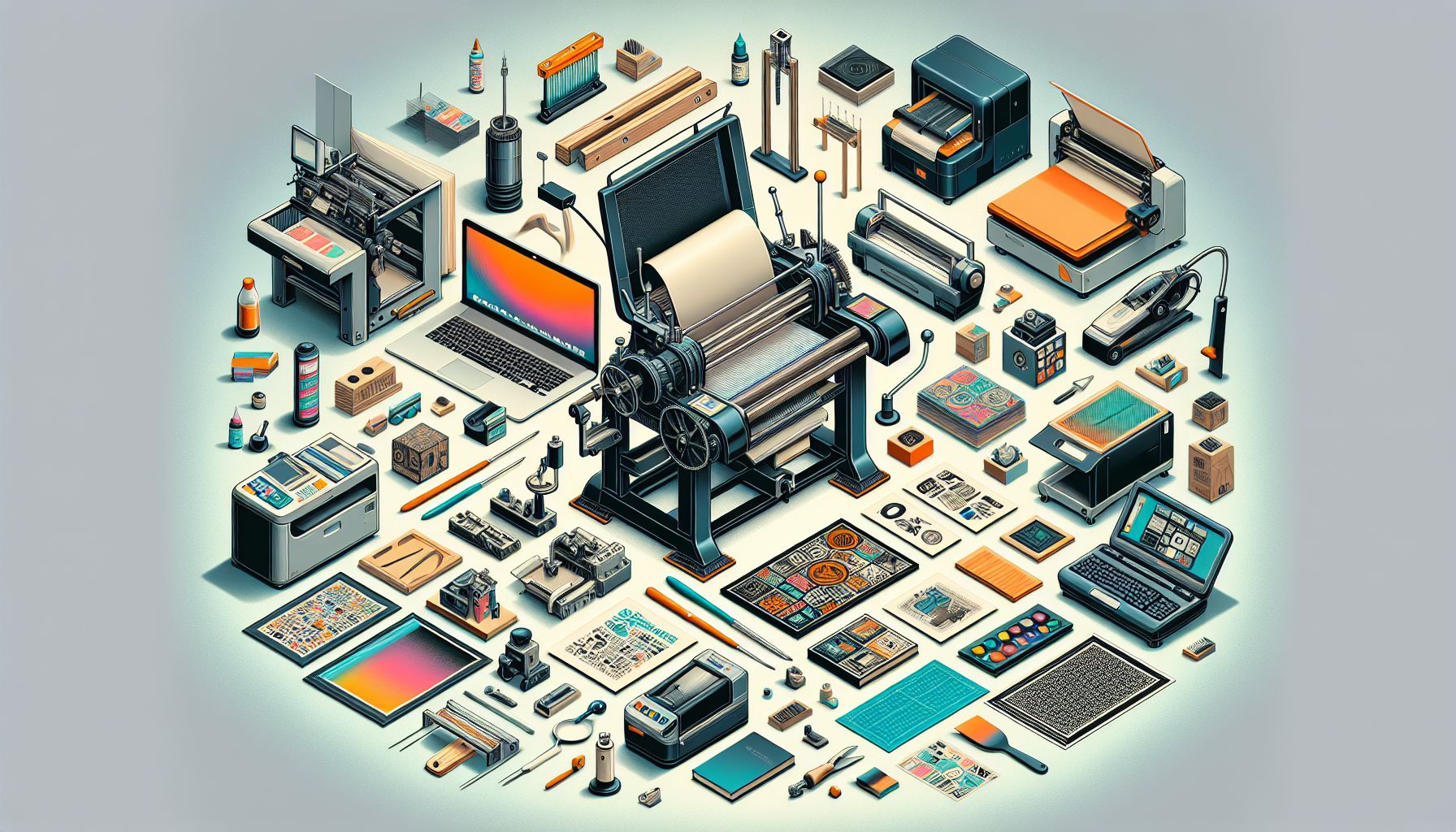
Unveiling the Art of Printing: An Overview of Modern Printing Techniques
Printing has been a vital part of human civilization, playing a key role in the proliferation of literacy, science, religion, and culture. From the ancient woodblock printing to today’s digitally-driven solutions, the art of printing has undergone an incredible evolution. This blog post explores the intricate world of modern printing techniques, bearing testament to the intricacy of this often overlooked field.
Introduction to Modern Printing Techniques
Modern printing techniques have revolutionized the way we disseminate information and display visual elements. Whether it’s to generate advertising materials like flyers and posters or to create accurate reproductions of stunning photographs and artworks, there are various printing techniques available for different use cases. Each method has its advantages, disadvantages, and applications which we’ll dive into further.
Digital Printing
In the era of digital technology, digital printing holds a distinct place in the printing world. This method uses digital images that are transferred directly to a variety of media, bypassing the need for a printing plate. The primary advantage of digital printing is its quick turnaround time and cost-effectiveness for small print runs. Digital printers are also capable of printing high-quality images with a high degree of accuracy.
However, digital printing may not be ideal for larger print runs as the cost per page remains consistent regardless of the number of prints. In contrast, other techniques like offset printing can become cost-effective as the print volume increases.
Offset Lithography
Offset lithography or simply offset printing, is a popular printing technique in the production of high-volume print materials such as magazines, newspapers, brochures, and stationery. This method involves the transfer of an image from a plate to a rubber blanket, which is then rolled onto the print medium.
The advantages of offset printing include high image quality and lower cost for larger volumes. However, preparing the plates can be time-consuming and costly, making this method less efficient for limited print runs.
Flexography
Flexography, commonly used in packaging, operates on a similar principle to the letterpress and uses a flexible relief plate for printing. Whether it’s plastic, metallic film, cellophane, or paper, this print technique can be applied on a variety of substrates, hence its extensive use in the packaging industry.
Though flexographic printing has high setup costs due to the need for custom plates, these costs can be offset over large volumes, making flexography ideal for large print runs.
Gravure Printing
Gravure printing, or rotogravure, is typically used for high-volume commercial printing. It produces prints of high quality but entails higher costs due to the use of engraved copper cylinders. This method is often employed for large-scale projects such as wallpaper, wrapping paper, furniture laminates, and postage stamps.
Screen Printing
Screen printing is a technique that uses a woven mesh to support an ink-blocking stencil. Screen printing is popular in the production of posters, artworks, and customized t-shirts. While it can produce vibrant colors even on dark surfaces, setting up the stencil for screen printing can be labor-intensive.
Letterpress Printing
Letterpress printing is one of the oldest forms of printing wherein reversed, raised surfaces are inked and then pressed into paper. Once largely replaced by offset and digital printing, letterpress has seen resurgence in recent years due to its unique, handmade appeal. It’s commonly employed in the creation of wedding invitations, stationery, and business cards.
Final Thoughts: Choosing the Right Printing Technique
Each printing technique offers unique capabilities, dictated by factors such as scale, cost, and materials. Digital printing is well-suited for small, custom projects due to its low setup costs and quick turnaround. Offset lithography and flexography provide an economic solution for high-volume printing but demand more significant startup costs. Gravure printing, while expensive, offers high-quality images for large scale projects. Screen printing is perfect for printing on different materials, and letterpress printing provides a touch of old world charm for specialty products.
Understanding these techniques enables individuals and businesses to make the best choice for their specific needs, enabling precise control over the print project’s quality, cost, and delivery. After all, in a world abundant with information, making a mark depends on how well one can leave an imprint, literally and figuratively.