
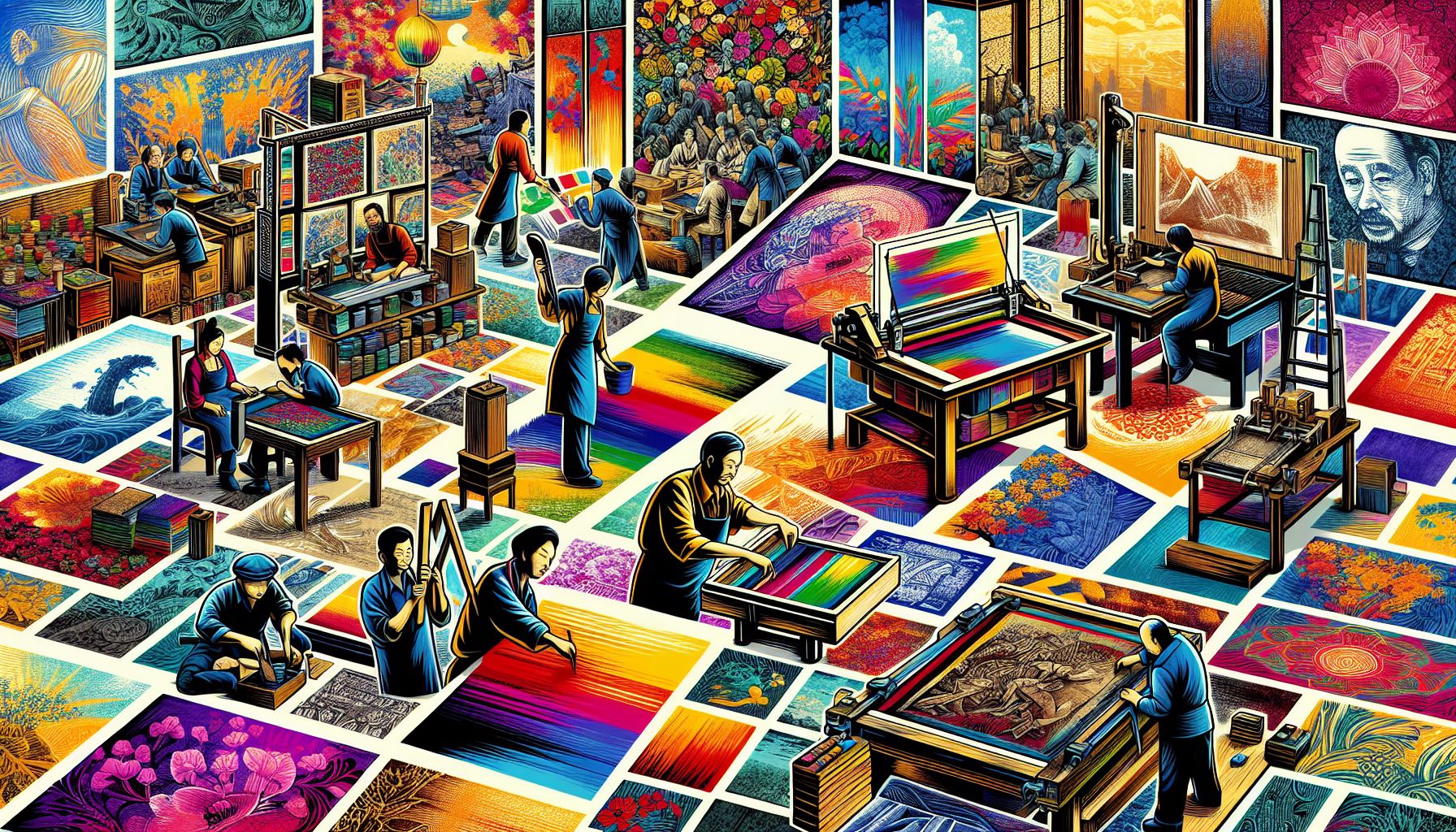
Printing Techniques: Diverse Symfony of Colours and Art
Have you ever seen a beautiful print or piece of artwork and wondered how it was created? The world of printing is renowned for its stunning variety and flexibility: artists use a plethora of printing techniques to produce dramatic and compelling pieces of art. This blog post will explore the key types of printing techniques, offering insight into how the most outstanding pieces of print artwork are often made.
Screen Printing
Screen printing, also known as serigraphy, is a versatile method that uses a nylon mesh to transfer ink onto a variety of materials – from fabric to wood, paper, metal, glass and ceramic. It was first introduced in China in the Song Dynasty and has played a significant role in creating art and intricate designs ever since.
To create a screenprint, an artist first creates a stencil, or screen, of their design. Ink is then spread onto the top of the screen and a squeegee is used to push the ink through the mesh and onto the material underneath. To make multi-coloured pieces, artists must use multiple stencils and layers of ink. The result is a high-quality, vibrant print that’s quite durable and does not fade easily.
Block Printing
Commonly used in fabric printing, block printing originated from East Asia and involves carving an image or design into a solid block material, such as wood or linoleum. The carved block is then coated with ink and pressed onto the material to make a print.
Block printing is a laborious process, as for multicoloured designs, each color requires its own block and must be printed sequentially. Yet, the uniqueness of each print, satisfyingly imperfect lines, and textures become the testament of the artist’s hand in the creation process, which many find appealing.
Lithography
From ancient Greek “lithos” (stone) and “graphien” (to write), lithography is a type of printmaking that uses a flat stone or metal plate. Unlike relief techniques like block printing, lithography is built upon the concept that oil and water do not mix.
In lithography, an image is drawn or painted onto the stone or plate with a grease-based medium. A series of chemical treatments are then applied which etch the image onto the surface. After the surface is inked, a print can be pulled. This method allows for beautiful, even tones and a softness to lines and textures, reminiscent of a charcoal or chalk drawing.
Digital Printing
The representation of the modern era, digital printing is a method that involves printing a digital image directly onto a variety of media. This type of printing allows for on-demand printing, short lead times, and even customization of individual images.
Digital printing usually refers to professional printing where small jobs from desktop publishing and other digital sources are printed using large-format or high-volume laser or inkjet printers. This method offers a lot of flexibility in terms of evolving design concepts and making quick changes.
Letterpress Printing
The original form of mass communication, letterpress printing is a relief printing process that involves inking raised type and then pressing it onto a smooth substrate. Also known as typography, this kind of printing was the norm for 500 years before offset printing, and now digital printing, came to prominence.
Letterpress gives a beautiful, handcrafted feel to the prints and it is often used for artisanal and bespoke projects like business cards, wedding invitations, book covers, and stationery.
Conclusion
Whether it’s through the delicate mesh of a screenprint or the chiselled precision of a block print, printing techniques allow exquisite designs to come to life and shine in their glory. Modern or traditional, every printing method highlights creativity and innovation in its unique brilliance.
Next time when you hold a printed piece of art or any printed material in your hand, take a moment to appreciate the technique that went into its creation and the journey it made from the creative mind to the tangible wonder that it is.