
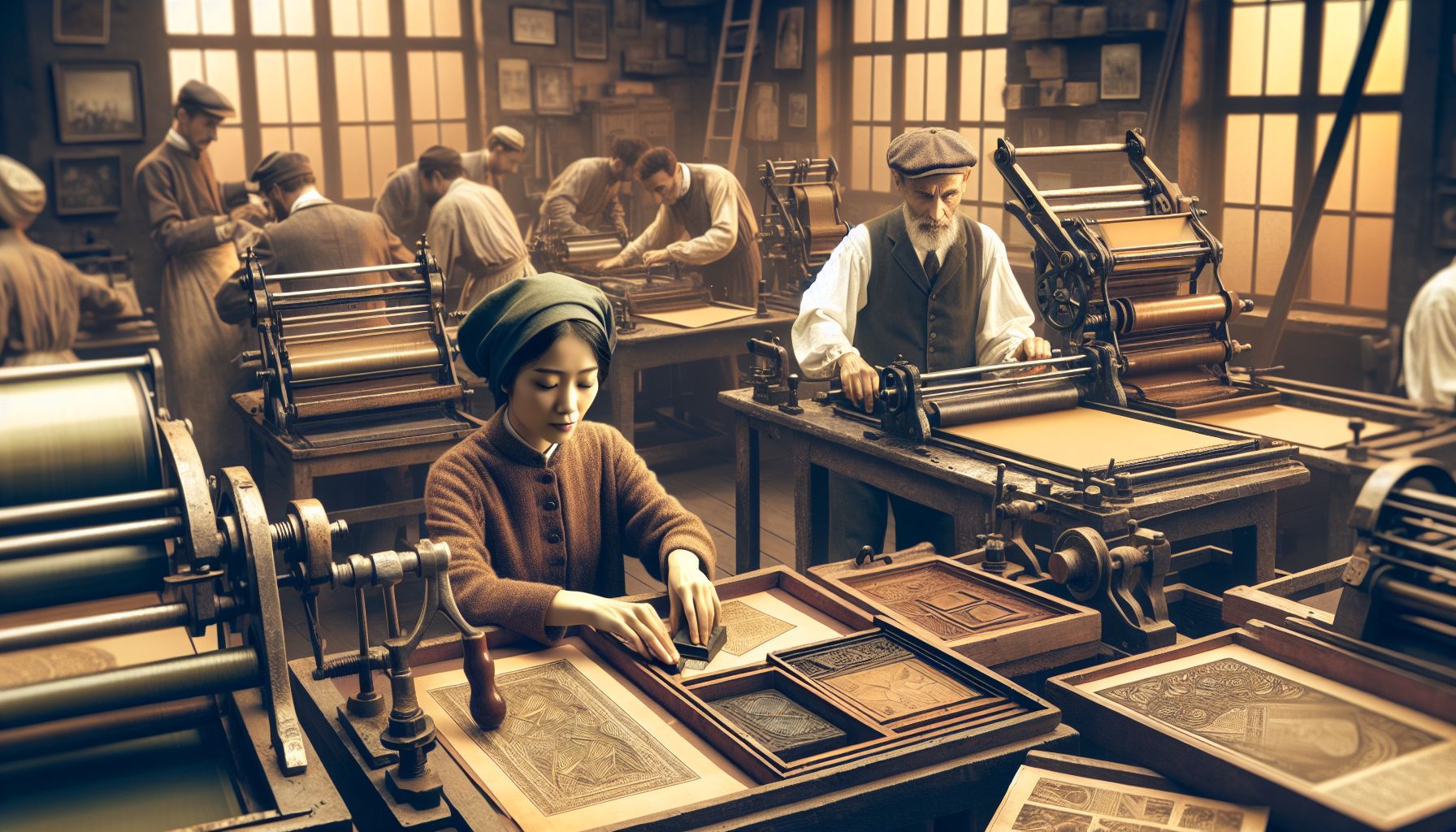
Explore the World of Printing Techniques
Printing techniques have come a long way since the invention of the printing press by Johannes Gutenberg in the 15th century. Today, there are a myriad of printing methods available, each with its own unique characteristics and applications. Whether you are looking to create business cards, posters, packaging, or fine art prints, understanding the different printing techniques can help you choose the best method for your project. In this article, we will explore some of the most common printing techniques used today and their various advantages and disadvantages.
Offset Printing
Offset printing, also known as lithography, is one of the most widely used printing techniques for high-volume commercial printing. In offset printing, the image is transferred from a plate onto a rubber blanket, and then onto the printing surface. This method is ideal for producing large quantities of prints with consistent quality and sharp detail. Offset printing is often used for brochures, magazines, catalogs, and other marketing materials.
One of the main advantages of offset printing is its ability to produce high-quality prints with vibrant colors and sharp details. It is also cost-effective for large print runs, making it a popular choice for businesses and publishers. However, offset printing requires more setup time and specialized equipment, which can make it less practical for small print runs or on-demand printing.
Digital Printing
Digital printing has revolutionized the printing industry by allowing for on-demand printing and customization. Unlike offset printing, which requires plates and setup time, digital printing transfers the image directly onto the printing surface from a digital file. This method is ideal for short print runs, variable data printing, and quick turnaround times. Digital printing is often used for business cards, brochures, posters, and personalized marketing materials.
One of the main advantages of digital printing is its ability to produce high-quality prints with minimal setup time. Digital printing also allows for variable data printing, which means that each print can be customized with unique information or images. However, digital printing may not be suitable for large print runs or prints that require special finishes, such as embossing or spot UV coating.
Screen Printing
Screen printing, also known as silkscreen printing, is a versatile printing technique that can be used on a wide range of materials, including paper, fabric, metal, and glass. In screen printing, a stencil or “screen” is used to transfer ink onto the printing surface. This method is ideal for producing bold, vibrant prints with a tactile quality. Screen printing is often used for t-shirts, posters, packaging, and signage.
One of the main advantages of screen printing is its ability to produce prints with vibrant colors and opaque inks. Screen printing is also cost-effective for medium to large print runs, making it a popular choice for apparel and merchandise. However, screen printing can be labor-intensive and may not be suitable for prints with fine details or gradients.
Flexography
Flexography, also known as flexo printing, is a versatile printing technique that is commonly used for packaging and label printing. In flexography, a flexible relief plate is used to transfer ink onto the printing surface. This method is ideal for printing on non-porous materials, such as plastic, metal, and foil. Flexography is often used for food packaging, labels, and corrugated boxes.
One of the main advantages of flexography is its ability to produce prints with fast drying inks and high-speed printing presses. Flexography is also cost-effective for medium to large print runs, making it a popular choice for packaging and label printing. However, flexography may not be suitable for prints that require fine details or complex colors.
Conclusion
Printing techniques have evolved significantly over the years, offering a wide range of options for creating high-quality prints. Whether you are looking to produce business cards, posters, packaging, or fine art prints, understanding the different printing techniques can help you choose the best method for your project. From offset printing to digital printing, screen printing to flexography, each technique has its own unique characteristics and applications. By exploring the world of printing techniques, you can unleash your creativity and bring your designs to life with vibrant colors and sharp details.