
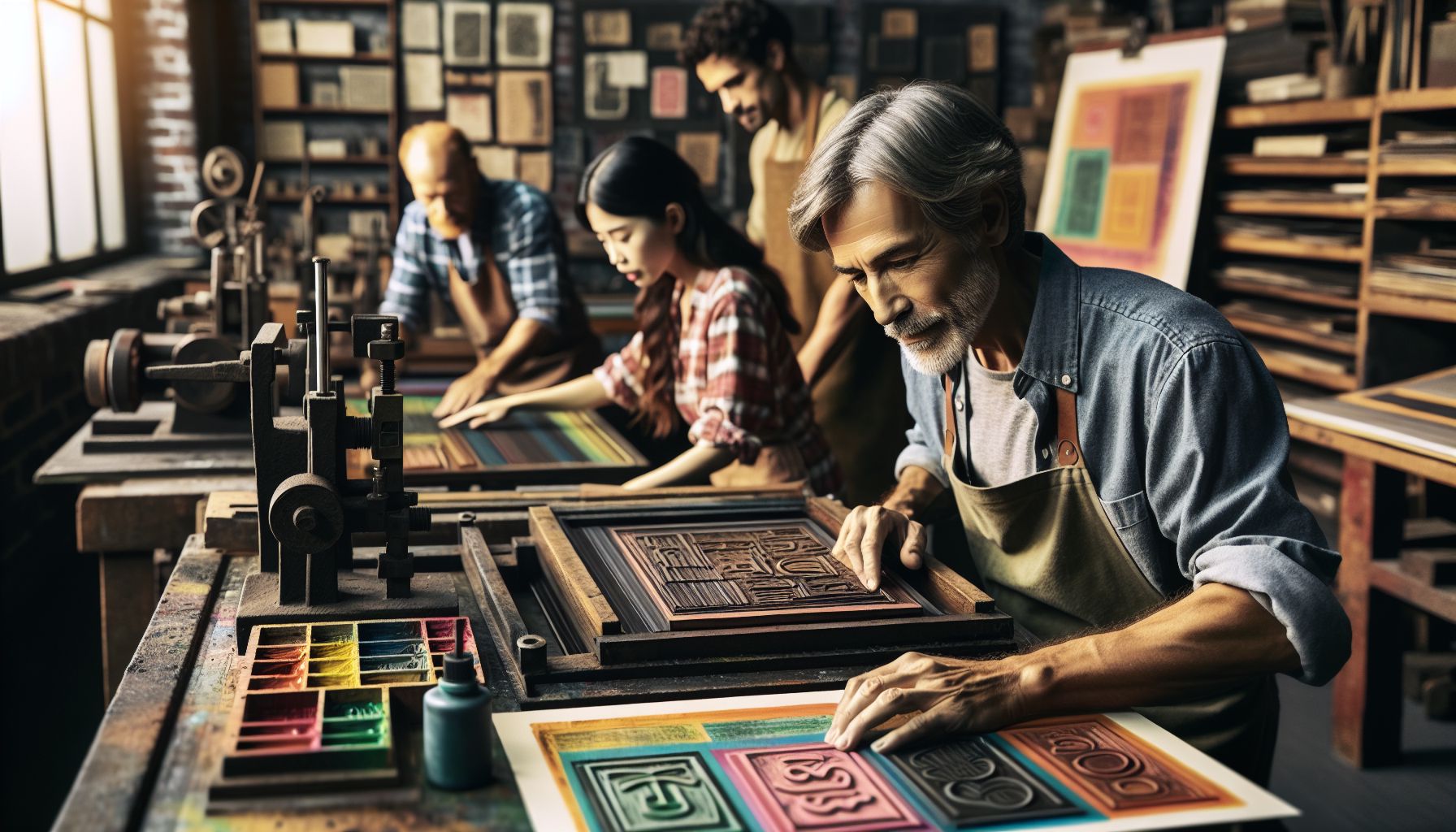
Exploring Different Printing Techniques
Printing has been a crucial part of human communication for centuries. From the early days of hand-carved woodblock prints to the digital printing technologies of today, the art and science of printing continue to evolve. In this article, we will explore some of the most common printing techniques used in the industry today.
Introduction to Printing Techniques
Printing techniques can be broadly categorized into two main types: traditional and modern. Traditional techniques, such as letterpress and screen printing, involve the physical transfer of ink onto a substrate. On the other hand, modern techniques, like offset and digital printing, use technologies such as plates and electronic files to reproduce images.
Traditional Printing Techniques
Letterpress
Letterpress printing is one of the oldest printing techniques, dating back to the 15th century. It involves pressing a raised surface, usually metal type, against paper to create an impression. Letterpress prints have a unique tactile quality and are often used for creating wedding invitations, business cards, and art prints.
Screen Printing
Screen printing, also known as silk screening, is a versatile printing technique that can be used on a variety of substrates, including paper, fabric, and metal. In this process, a stencil is created on a mesh screen, and ink is pushed through the stencil onto the substrate. Screen printing is popular for creating posters, apparel, and signage.
Woodcut
Woodcut printing is another traditional technique that involves carving an image into a block of wood. Ink is then applied to the block, and paper is pressed against it to transfer the image. Woodcut prints have a rustic and handmade look and are often used in fine art and book illustrations.
Modern Printing Techniques
Offset Printing
Offset printing is a widely used modern printing technique that produces high-quality prints with sharp detail and vibrant colors. In offset printing, the image is transferred from a plate to a rubber blanket and then onto the substrate. This indirect process allows for consistent and precise printing on a variety of materials.
Digital Printing
Digital printing is a modern printing technique that uses electronic files to reproduce images directly onto paper or other substrates. Unlike offset printing, digital printing does not require plates, making it a cost-effective option for short print runs and variable data printing. Digital printing is commonly used for brochures, business cards, and personalized merchandise.
3D Printing
3D printing is a cutting-edge printing technology that creates three-dimensional objects by layering material, such as plastic or metal, according to a digital design. 3D printing is revolutionizing industries such as manufacturing, healthcare, and architecture by enabling rapid prototyping and custom production.
Conclusion
Printing techniques have come a long way since the early days of letterpress and woodcut printing. Today, a wide range of traditional and modern printing techniques are available to suit different needs and budgets. Whether you are looking for a handmade aesthetic with letterpress or a high-volume print job with offset printing, there is a printing technique for every project. As technology continues to advance, we can only imagine what exciting new printing techniques the future holds.